
In the last three years South and Central American governments have swung dramatically right, with conservative governments gaining power in Argentina, Colombia, Ecuador, Honduras, Bolivia, Chile, Costa Rica, among others. The biggest victory could be the recent election in Brazil where Flavio Bolsonaro, the son of prior president Jair Bolsonaro, advanced to the next election against longtime center-left Workers’ party candidate Lula da Silva.
One speculative source of the political change is the defunding of U.S. Agency for International Development (USAID) in 2025. The implication is that USAID’s philanthropic grantmaking towards civil society groups and nation building is just soft power political influence in disguise meant to prop up favored candidates and oust unfavored ones akin to the color revolutions in Eastern Europe.
Yet there’s been little evidence found of USAID or other grants related to election interference. One potential State Department grant in 2026 related to countering censorship got a particular amount of attention and complaints from Brazil’s attorney general, but that was only for $1 million—a small amount considering the hundreds of millions sometimes handed out on a yearly basis—with no recipient being designated yet.
President Trump imposed sanctions on Brazil over prosecution of ex-president Bolsonaro, which led to accusations of electoral interference, but it didn’t seem to affect the outcome of the prosecution.
And much of USAID funding in Brazil doesn’t appear to be aimed at civil society groups or media campaigns in general. USAID did heavily support the Consortium for Elections & Political Process (CEPPS)—a nonprofit focused on strengthening democracies and judiciaries around the world—with $3.3 billion dollars in grants, but none of those grants were directed towards Brazil based on USASpending data.
Instead USAID funding is largely directed at the Amazon, related to subjects like environmental preservation, indigenous outreach, and support for Venezuelan refugees. Those might seem like benign philanthropic aims from a distance, but they are highly controversial topics in Brazil. Bolsonaro’s base surrounds the industrial and agribusiness center of Brazil around Manaus, whereas da Silva has regularly courted preservation groups.
Much of the refugee funding goes through the Adventist Development and Relief Agency International, who has received over $40 million since 2008, largely related to refugee support. The Task Force for Global Health has received about $39 million for vaccines and medicines to help eradicate tropical diseases like river blindness. The Instituto Internacional de Educação do Brasil (IEB) is a civil society training individuals in environmental concerns and indigenous cultures that received over $33 million. The U.S. environmental organization The Nature Conservancy received over $13 million. The Carter Center received almost $21 million to focus on river blindness, voter education, and educating women.
Funding detailed here is for assistance and does not include contracting payments. Amounts are based on obligations not necessarily distributed yet and can include loans along with direct grants.
Battle Over Belo Monte Dam
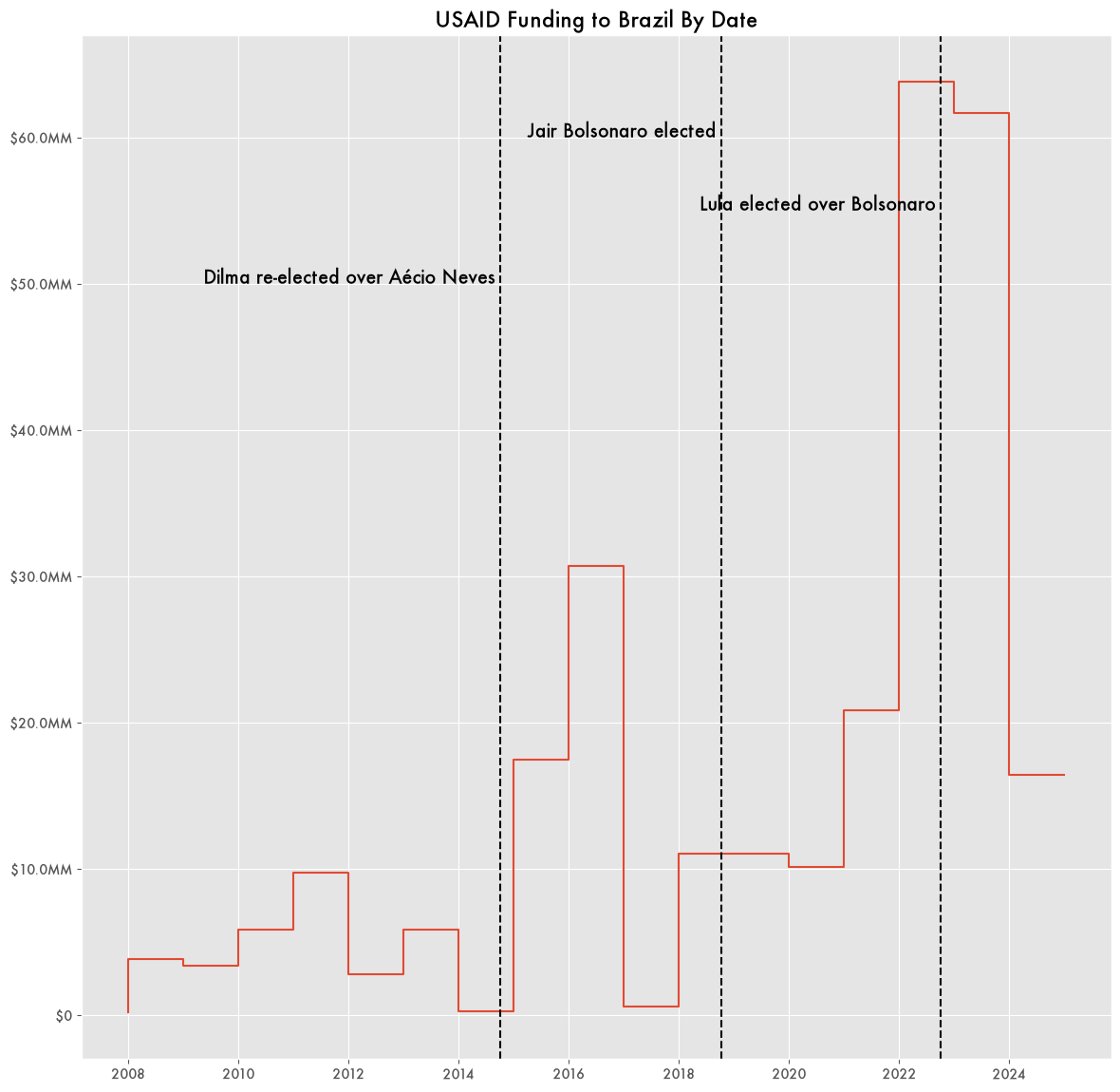
In general, USAID did little in Brazil prior to 2016. In 2016 USAID grants flooded in, with a $9 million grant to Global Initiatives for its Prospera program that funded sustainable corn production as well as initiatives to “combat hunger, promote gender equality, and reduce inequities in the communities surrounding Coromandel and São José do Belmonte.”
That was under then-president Dilma Rousseff—the ex-Marxist guerilla with the Armed Revolutionary Vanguard-Palmares (VAR-Palmares) who went on to work in the energy department under the first da Silva cabinet from 2002 to 2010, before running for president herself in 2010.
Large U.S. funding to the Amazon during her tenure is interesting as her presidency was embattled with indigenous groups over development of the 10 gigawatt Belo Monte mega dam on the Xingu river in Pará—a tributary of the Amazon. Belo Monte was conceived back in the 1970s but struggled against environmental opposition for decades, and it wasn’t until Rousseff championed the project during her tenure that any headway was made, giving it approval in 2011 soon after election with operation beginning in 2016. It now produces somewhere between five and 10 percent of the country’s total energy generation depending on the time of year.
Rousseff would be dogged by accusations of bribery related to the project for years, and indigenous groups continue to seek reparations. She was eventually impeached in 2016 over accusations of falsifying the government’s finances to look better than they actually were. While Rousseff was at odds with indigenous groups over environmental concerns, she is close to da Silva who actively supports Amazon anti-deforestation campaigns.
That time period under Rousseff is also when the Brazil security agency, Agência Brasileira de Inteligência (ABIN), wrote reports in 2011 and 2012 detailing U.S. nonprofits interfering in Brazilian affairs by supporting indigenous campaigns against infrastructure projects in the Amazon, like the Belo Monte dam, the BR-317 portion of the Interoceanic highway in Acre, the Urucu-Porto-Velho gas pipeline, and hydroelectric plants on the Madeira river over social and environmental concerns. The reports were not revealed until 2023 through a Senate inquiry.
It called out the World Wildlife Fund (WWF) and Nature Conservancy—two USAID Brazil grant recipients—along with various U.S. and Brazilian nonprofits like Amazon Watch, Greenpeace, Avaaz Foundation, Amigos Da Terra (Friends of the Earth Brazil), International Rivers, Clinton Global Initiative, Friends of the Earth, and Conservatism International for their work campaigning against the Belo Monte dam project.
Much of USAID’s funding during Rousseff’s period had died down by the time the dam was completed and Jair Bolsonaro took office in 2019, only to see over $120 million spent in Brazil around the same time as the reelection of Lula in 2023.
State Department Funding Eclipses USAID
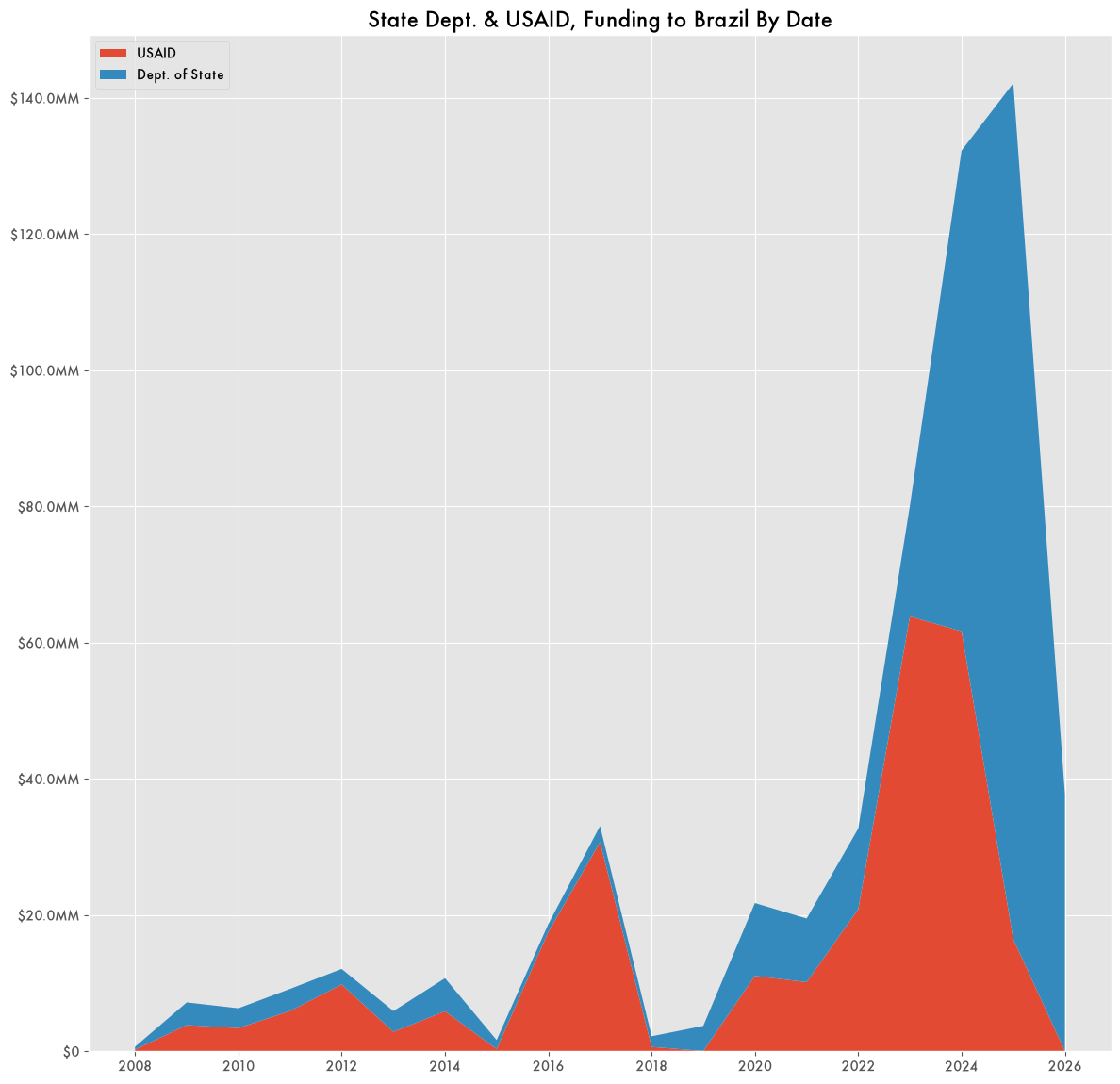
Whether or not USAID was influencing Brazilian elections seems irrelevant since much of USAID has been integrated into the State Department, which now spends significantly more in Brazil than what USAID ever did.
USAID funding to Brazil topped off at $62 million in 2024 while the State Department now spends over $125 million a year there, and that doesn’t include funding from various other agencies such as the Department of Health and Human Services, Overseas Private Investment Corporation, Department of Agriculture, National Science Foundation, and the Department of Defense among others.
Funding Labor More Than Environmental
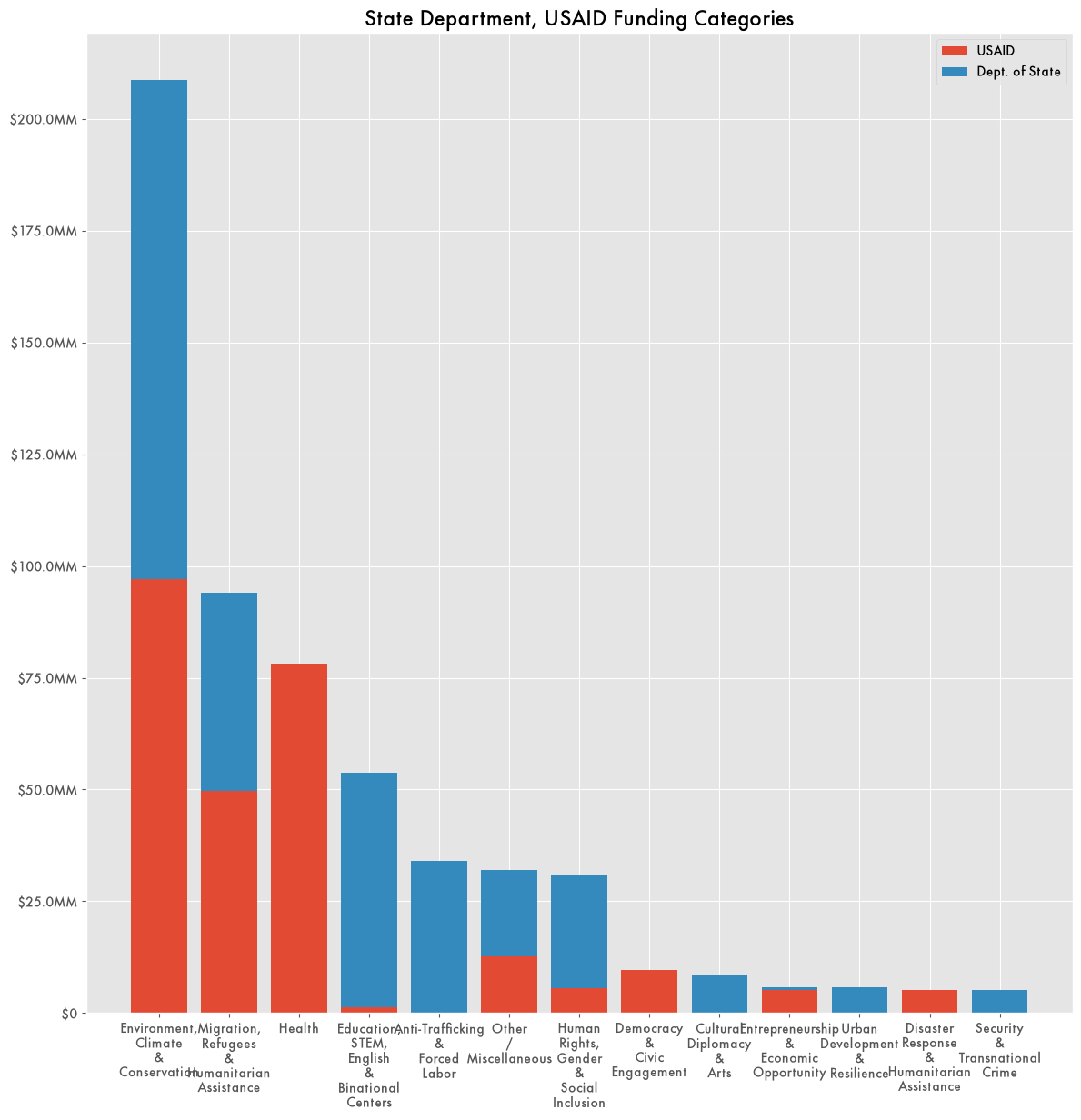
Historically the two agencies funded similar topics in similar amounts, like environmental and refugee causes. USAID tended to fund more related to healthcare whereas the State Department put more towards education and human rights.
But in the last two years, State Department funding has gone more to labor organizations in Brazil than environmental ones. Top recent recipients include:
U.N.’s International Labor Organization ($39 million)
Vital Voices Global Partnership ($22 million) to support survivors of gender-based violence
Fundação Para O Desenvolvimento Científico E Tecnológico Em Saúde (Fiotec) for HIV Support ($20 million)
United Nations Development Program ($13 million) for climate observations
American Center for Labor Solidarity, connected to the AFL/CIO ($12 million) to support labor organizations
COVID Funding Back and Forth
The largest funding on record is from the U.S. International Development Finance Corporation in 2021 of $250 million, but that was for government risk insurance related to purchase of COVID vaccines. While that was valued at $250 million, in effect Brazil probably gave more money to the U.S. through the purchase of COVID vaccines, with estimates in the range of $21 to $28 billion.