
In 2013, Chicago mayor Rahm Emanuel announced the largest school closures in U.S. history. In one year, 50 underperforming schools would be closed to account for declining student populations, save on resources, and deal with a $1 billion budget hole.
An NPR story from 2023 detailed how ten years later many in the city lamented the closings, and residents are now forced to deal with fewer opportunities while many of the buildings lay empty.
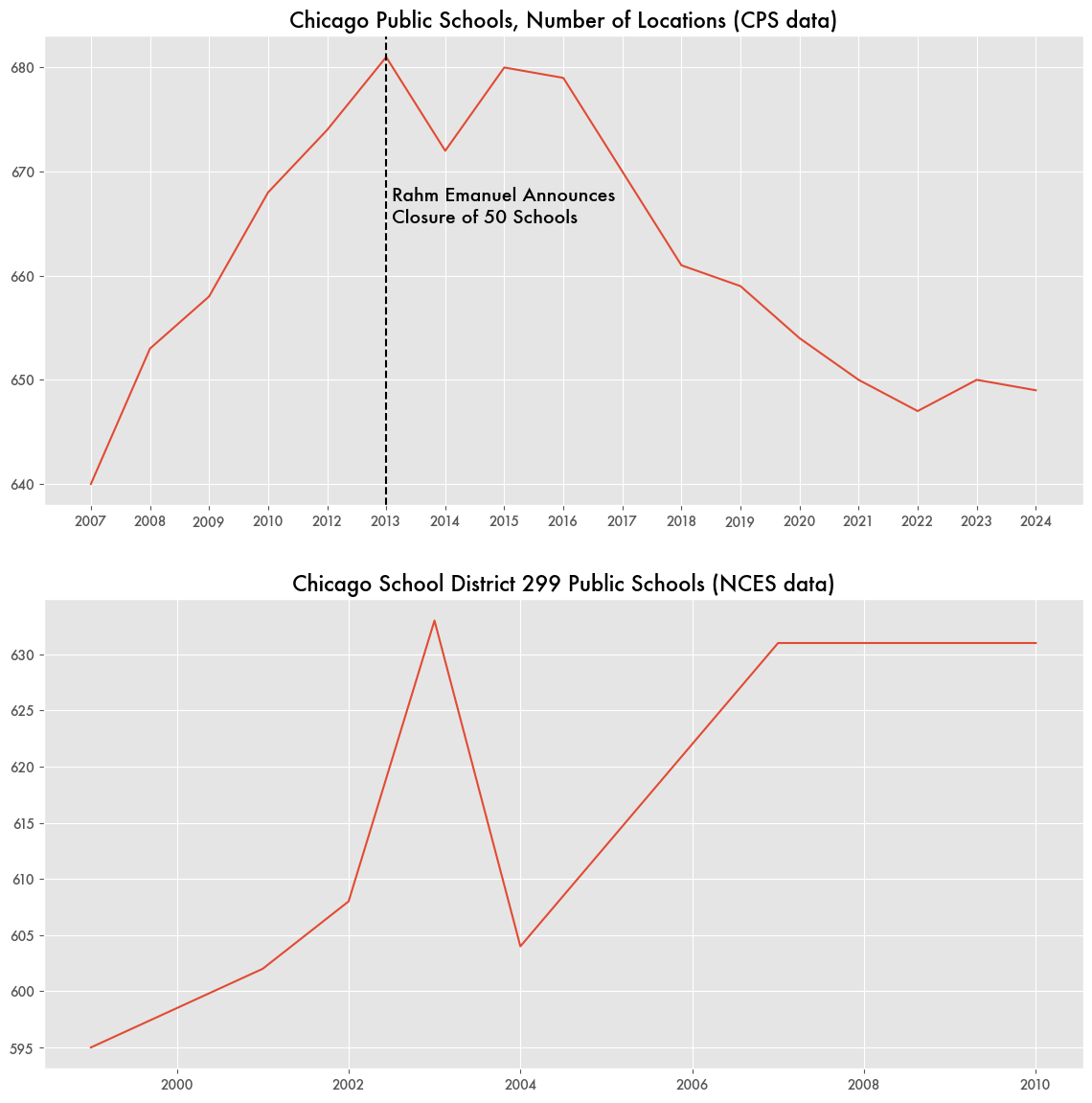
But data from Chicago Public Schools shows the total number of locations only declining by 30 since 2013, and it happened slowly, not all in one year. And the number of closings was relatively minimal considering that there was a growth of 41 schools in the six years prior.
Even more schools may have been added before that.Based on Department of Education’s National Center for Education Statistics (NCES) data, Chicago’s District 299 added 40 schools since the late nineties. Some schools may have closed since 2013, but the net result was actually more schools.
Ostensibly the school shutdown was intended to save money and plug that $1 billion budget hole, but the school budget has only grown since 2013. What was then a $5.3 billion budget ($7.5 billion in current dollars) is now $10.25 billion based on city budget documents.
According to data from NCES, the number of full-time equivalent teachers in District 299 has only gone up. What was 22,951 in 2003 is currently 23,532. Student-teacher ratios went from 18.93 to 13.77.
Some of this is already well known. Under then-CEO Arne Duncan, who went on to become Secretary of Education under Obama, CPS went on a public charter school creation spree in the early 2000s, while also closing a few traditional schools.
When they started closing schools after 2013, the majority were charter schools and many were only recently created. Of 47 schools that no longer appear in CPS data, 35 didn’t exist in 2007, 21 were charters, and 5 were contract schools.
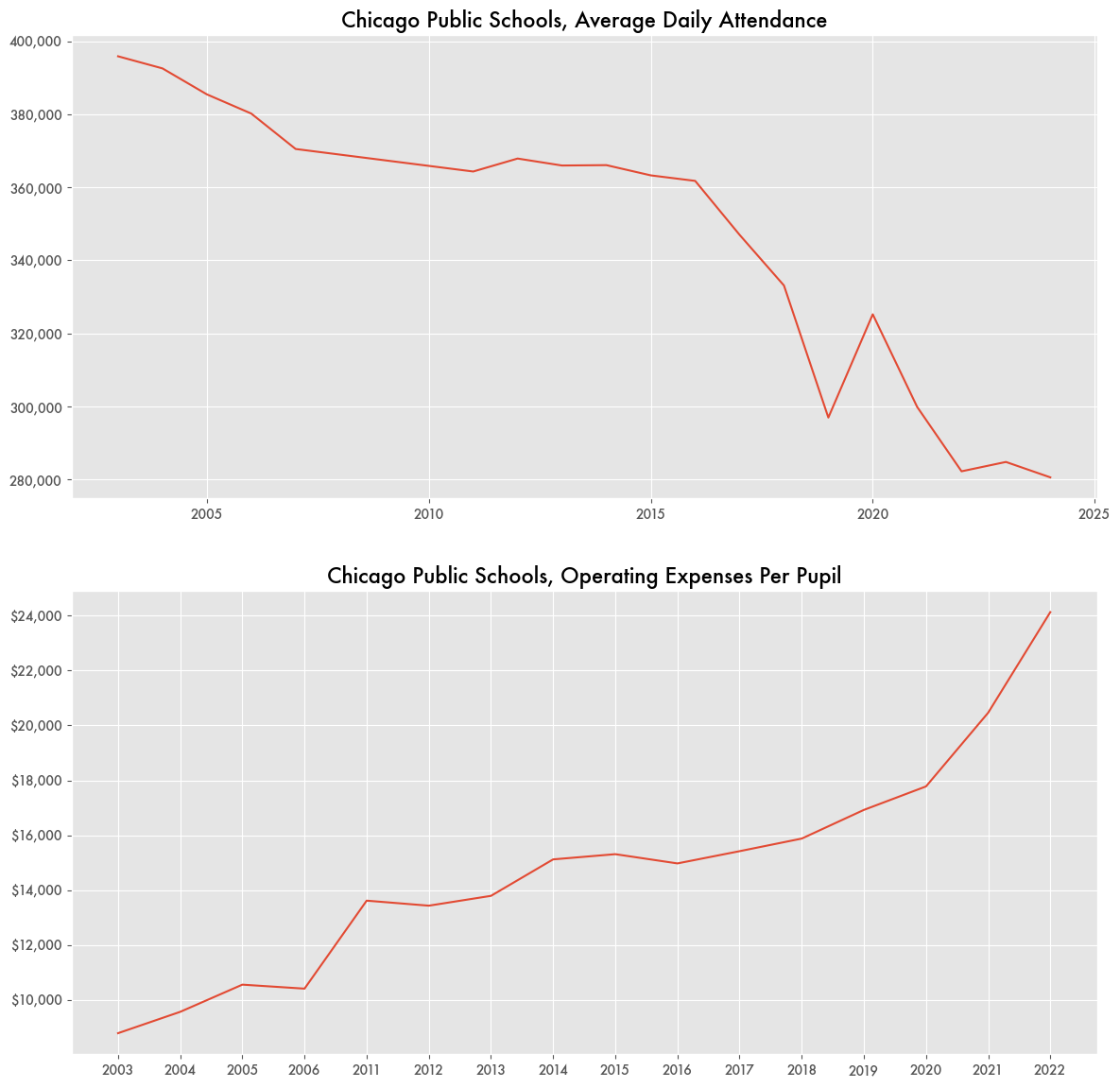
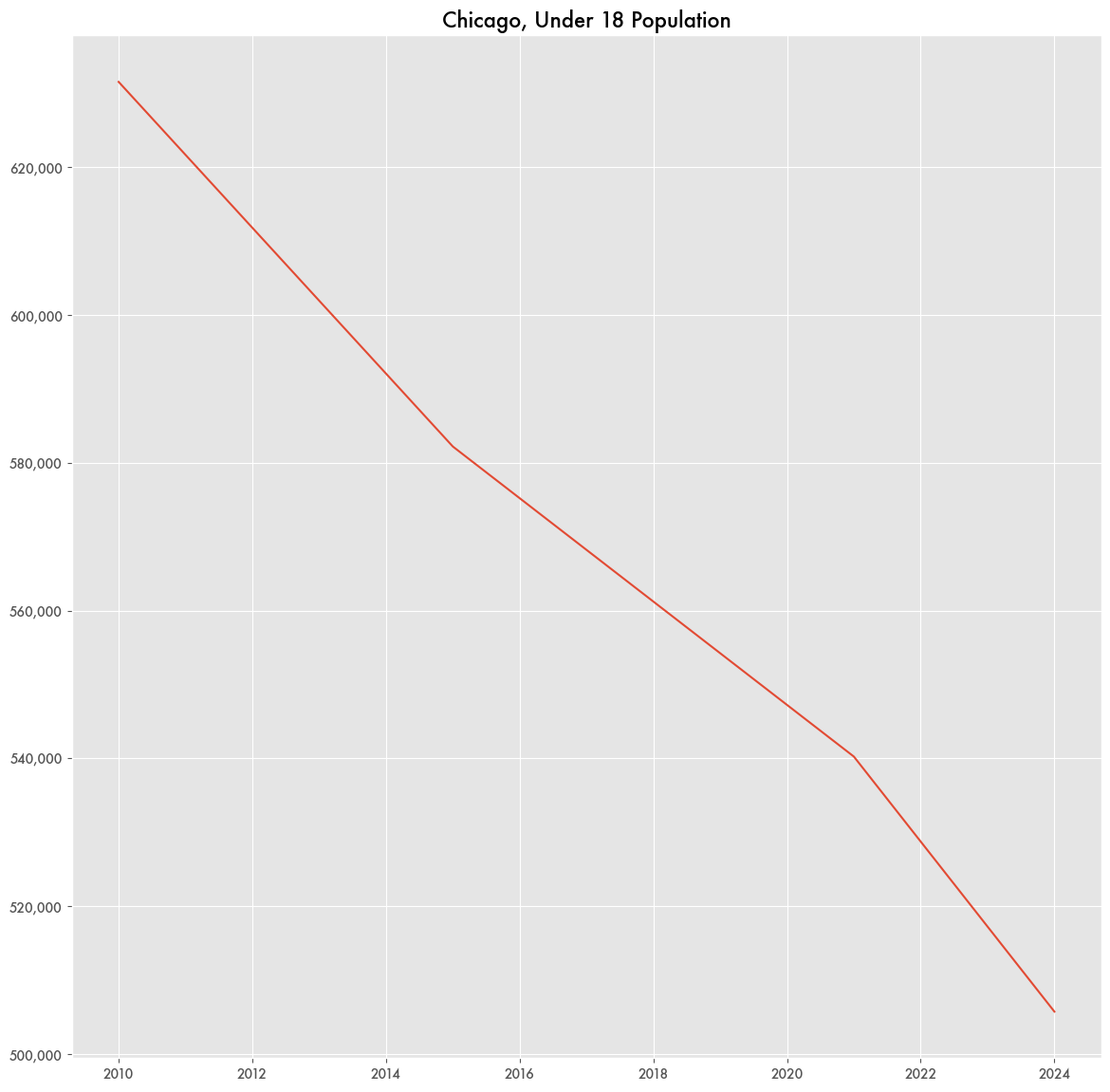
It’s an important point to make since Chicago’s population has been in stark decline for the last few decades. As families leave the city, the school system has been hemorrhaging students. Over 100,000 school-age residents left the city since 2010 based on U.S. Census data. Average daily attendance is down over 100,000 according to NCES data, possibly indicating some are leaving for private schools.
With little else changing—more schools, similar number of teachers, yet a lot fewer students—it means the teacher-student ratio and spending-per-student ratio has doubled.
While being flush with cash and resources could have been an opportunity for the city’s educational system to turn itself around, Chicago’s education system still struggles. According to the independent research site Wirepoints only 29 percent of Illinois students can read at grade level. There are school districts with 7 percent proficiency in math, while employees earn hundreds of thousands.
For Douglass High School in Chicago’s West side, despite having almost no students—35 out of a capacity of 912—and 1.6 teachers per student and spending $68,203 per student, zero students were proficient in reading in 2023.