
On Friday, the Department of Government Efficiency (DOGE) working with Health and Human Services (HHS) released provider-level spending data for Medicaid to the public.
Previously, Medicaid spending data was aggregated to totals that don’t give details about which providers are receiving the spending. This new data provides a much more granular view of how Medicaid funds are really being spent.
And without much effort it’s easy to see how egregious some of the charges are. Not just a couple standard deviations outside the median but ten and twenty times the average.
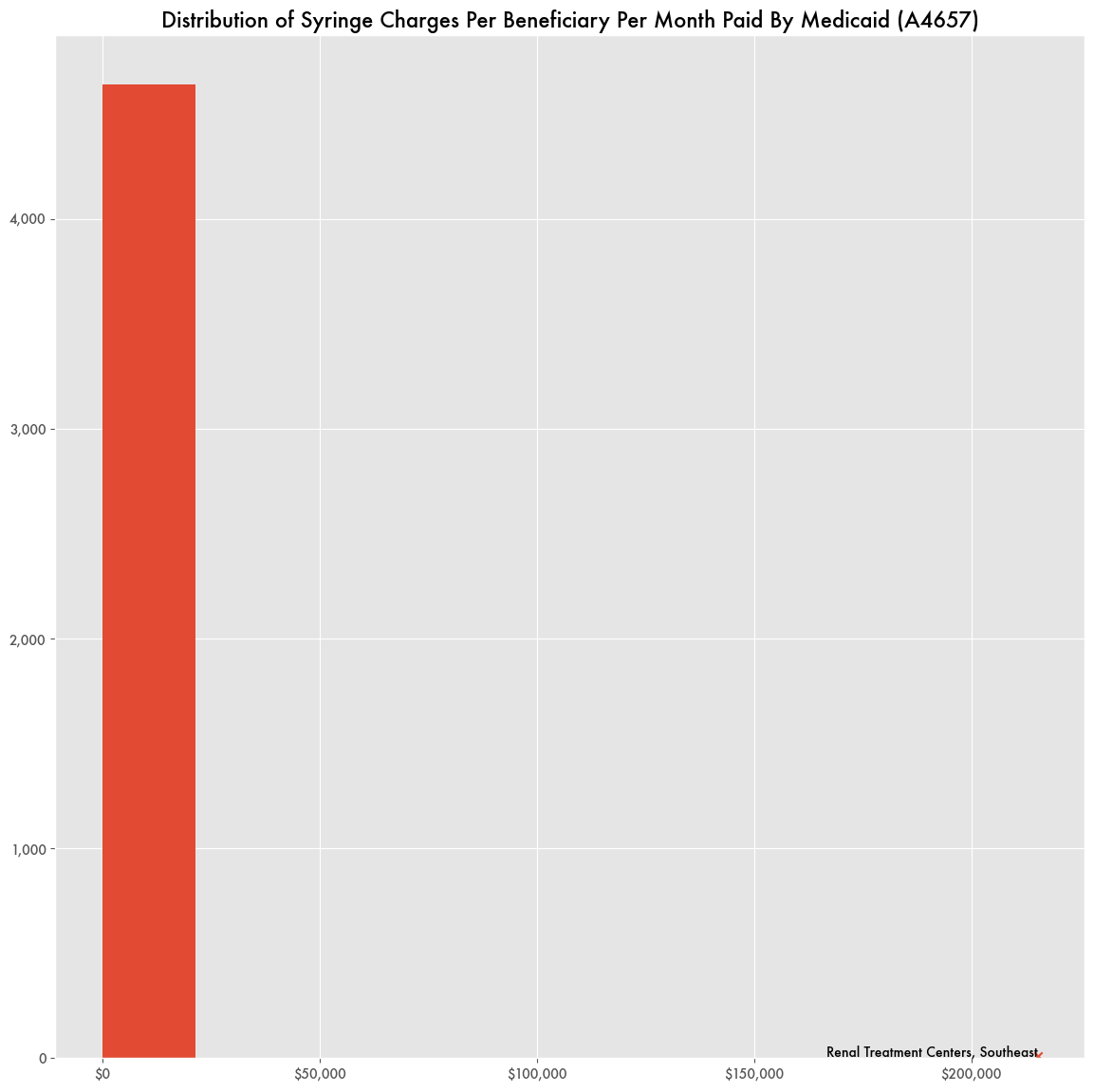
For example, the average spending to a provider for syringes (HCPCS code:A4657) in a month is less than $10.
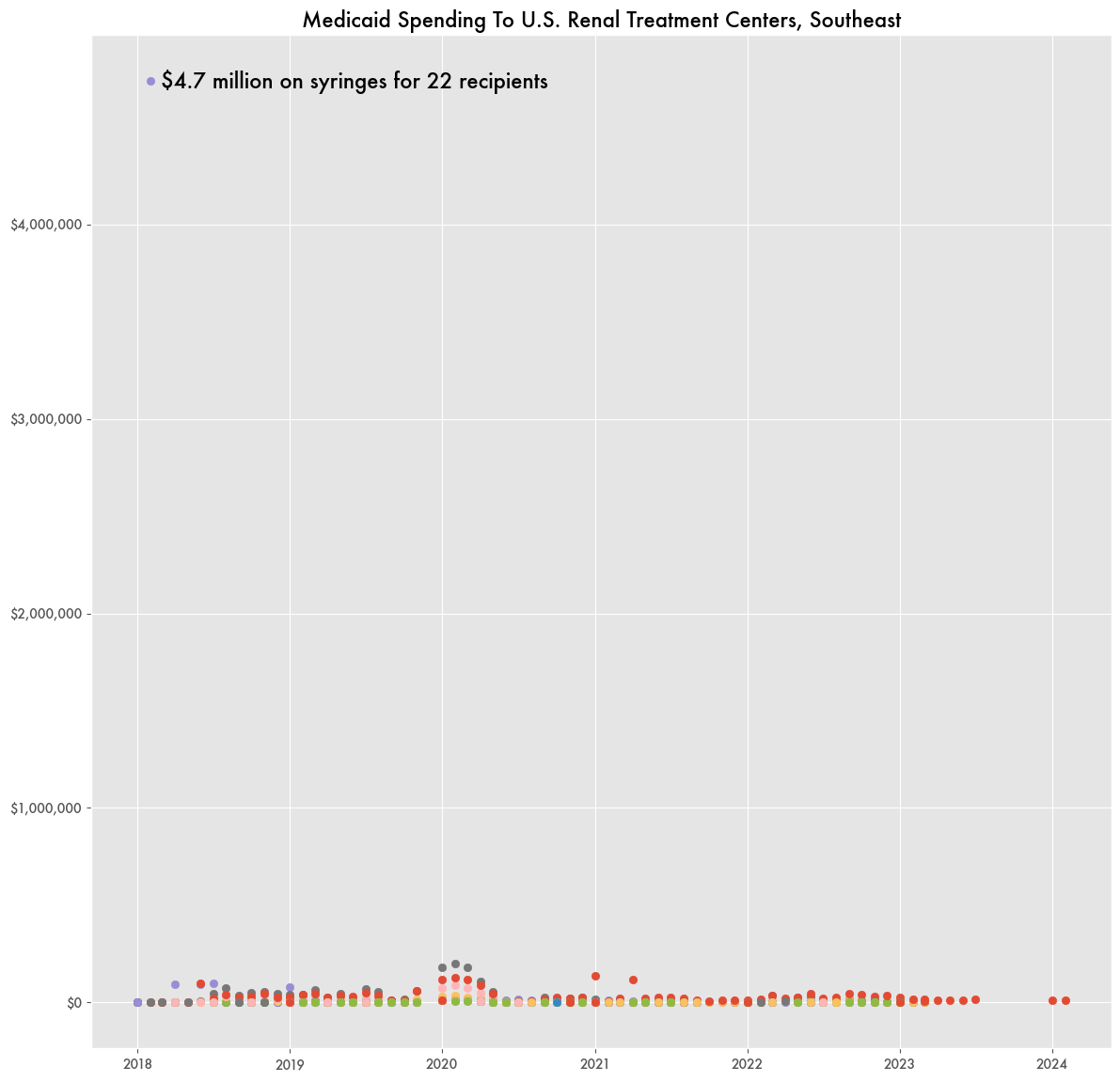
Yet in 2018 Medicaid gave U.S. Renal Treatment Centers, Southeast over $4.7 million for syringes for 22 recipients—an average spend of $215,314 per recipient.
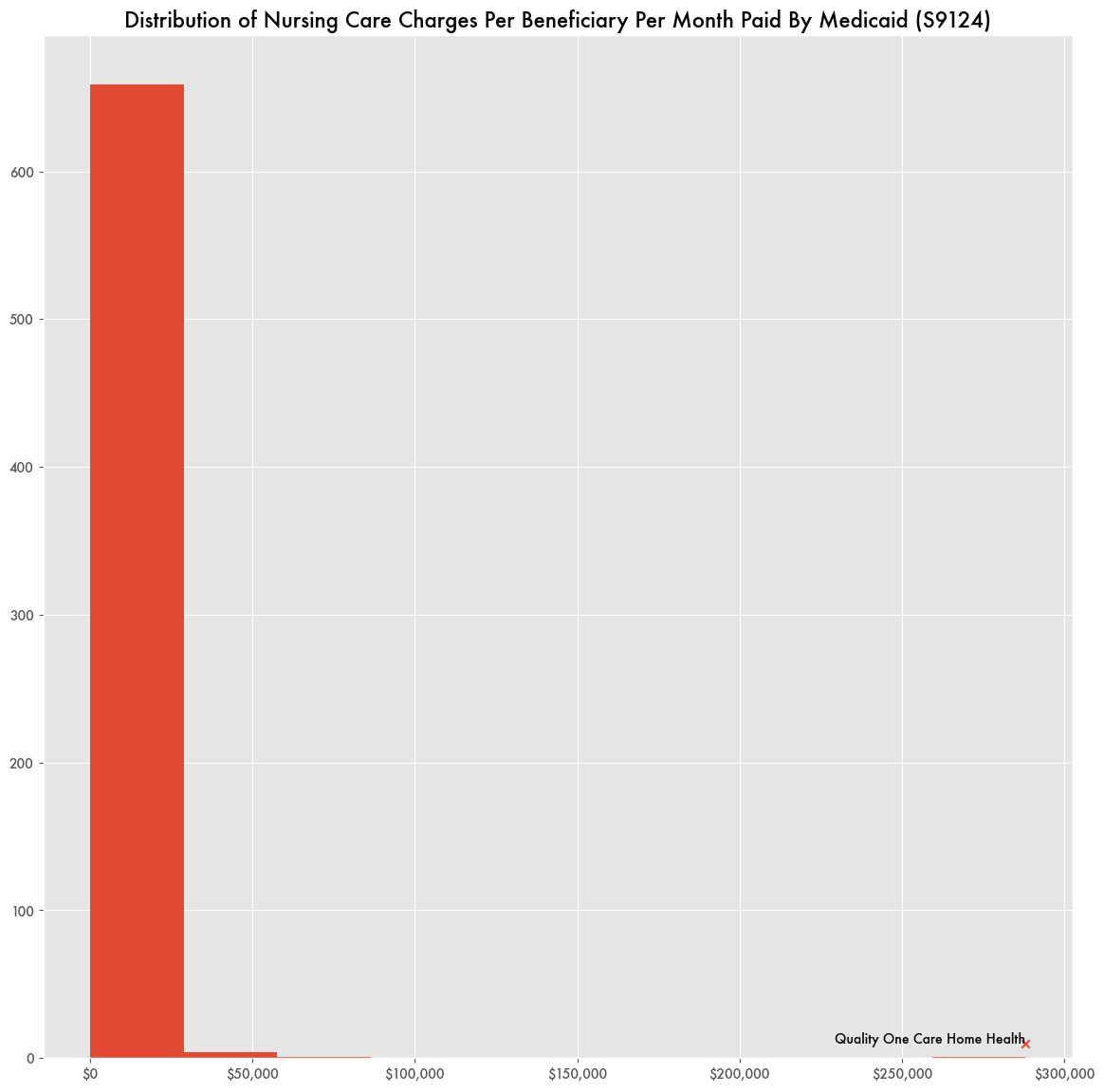
For nursing care (HCPCS: S9124), the average spend per beneficiary per month is $9,029. Yet Quality One Care Home Health in Silver Spring Maryland was spending $288,058 per beneficiary per month.
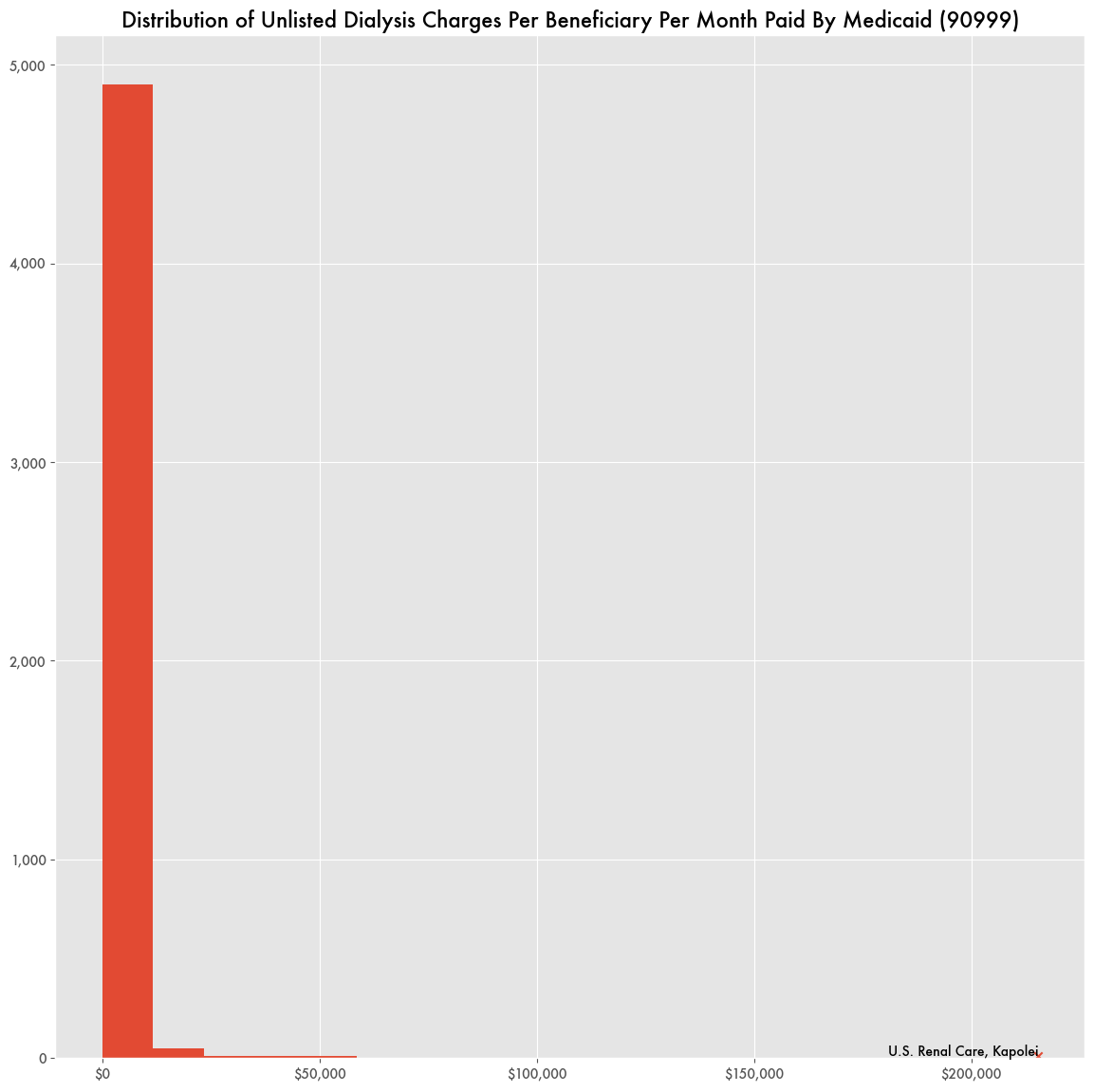
Miscellaneous dialysis charges (HCPCS: 9099) rarely top $3,000 per person per month, but somehow U.S. Renal Care in Kapolei, Hawaii was charging Medicaid over $200,000 per person.
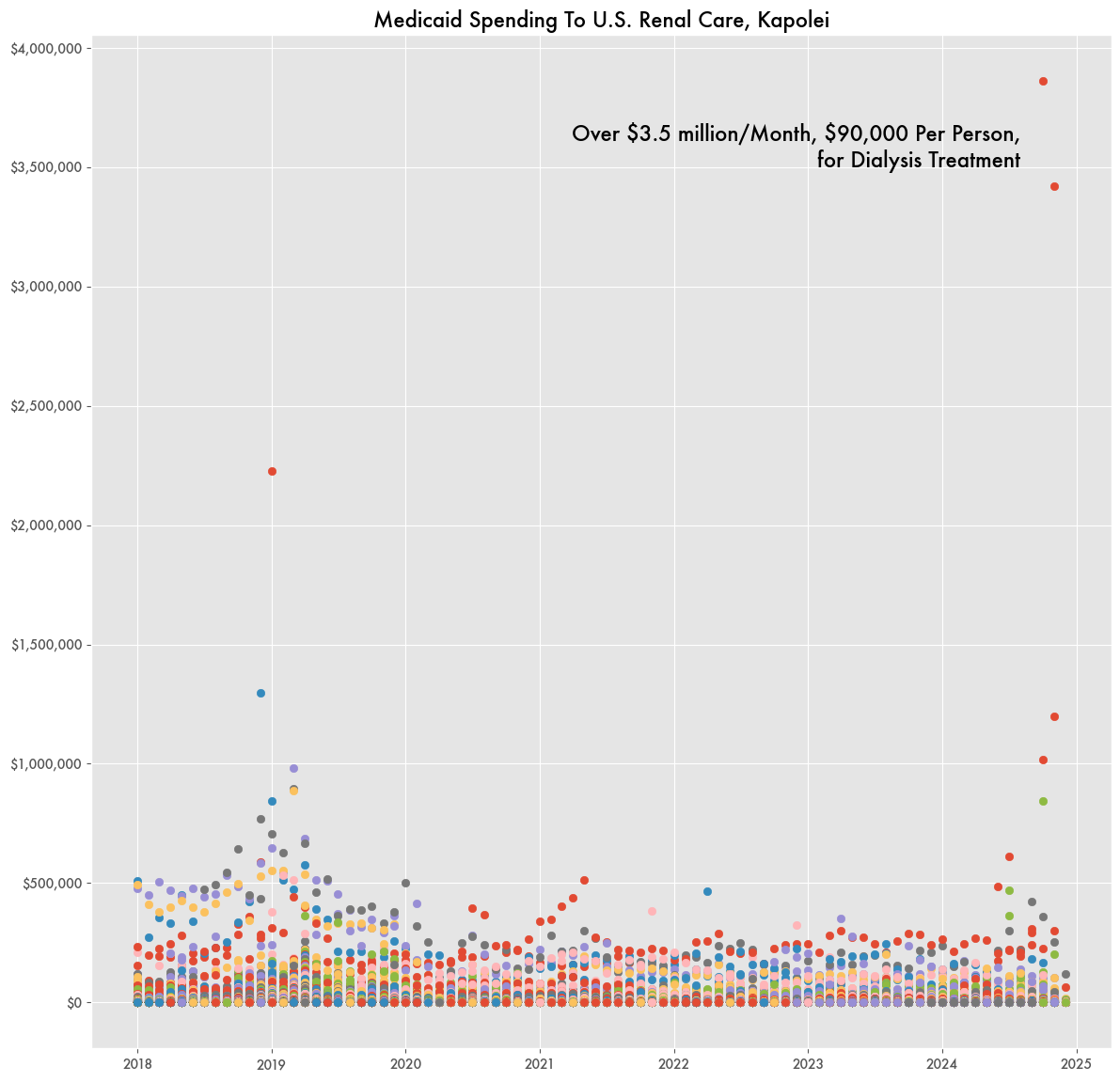
While the data release to the public is new, none of this is likely new to HHS. All of these providers are listed in an HHS Flagged Service Providers data sheet for exactly what you would expect: charges far beyond average costs.
U.S. Renal Treatment Centers was prosecuted under the False Claims Act by the Justice department for Medicaid overcharging related to dialysis medicine, but that was back in 2013. All of the recently released is after 2018.
Excess spending in the data does not necessarily imply fraud or misconduct but could simply be issues with the data and how it is reported.