
The common theme of the 2007-2008 financial crisis is that the housing bubble led more and more people with weaker credit to take a chance on homeownership using subprime lending. Banks were eager to lend money even to those who usually couldn’t afford a home or provide proof of income.
Homes became overvalued. As previously covered in Investigative Economics, when interest rates went up, borrowers could no longer afford their monthly payments. The bubble burst, and the subprime crisis led to the foreclosure crisis. The wave of foreclosures in sunbelt cities left thousands of vacant properties in its wake as homeowners found homes somewhere cheaper.
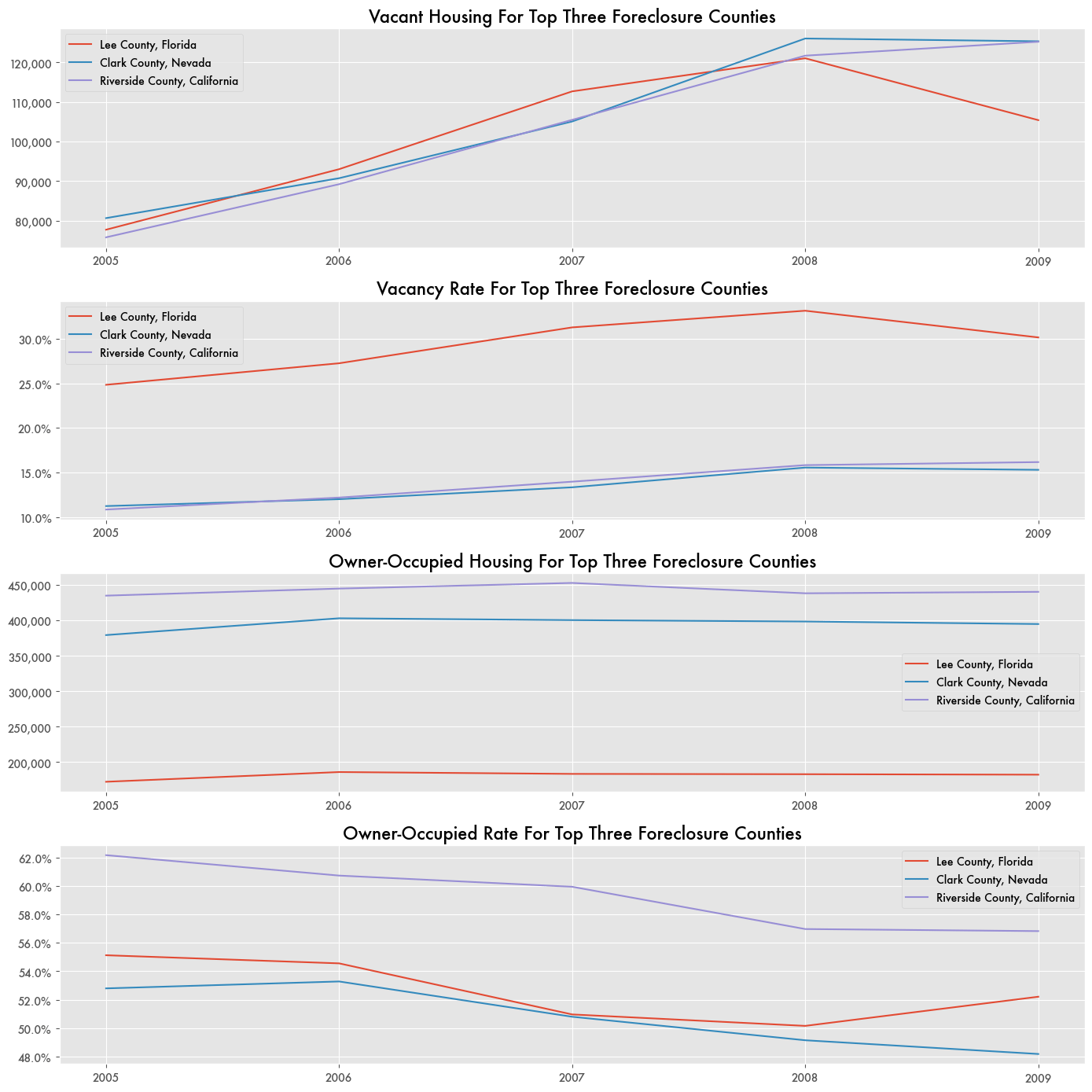
But the vacant property rate was actually higher before the foreclosure crisis for some of the municipalities hit hardest by the foreclosure crisis, not after, and it was growing fast. On top of that, owner-occupied housing grew little in a period that was supposedly driven by home ownership. For some areas, the owner-occupied housing rate actually declined based on Census American Community Survey (ACS) estimates.
Ostensibly, all those subprime borrowers were living in the homes they were buying, but the numbers seem to indicate they were being bought but not lived in as investments.
Sunbelt Housing Boom
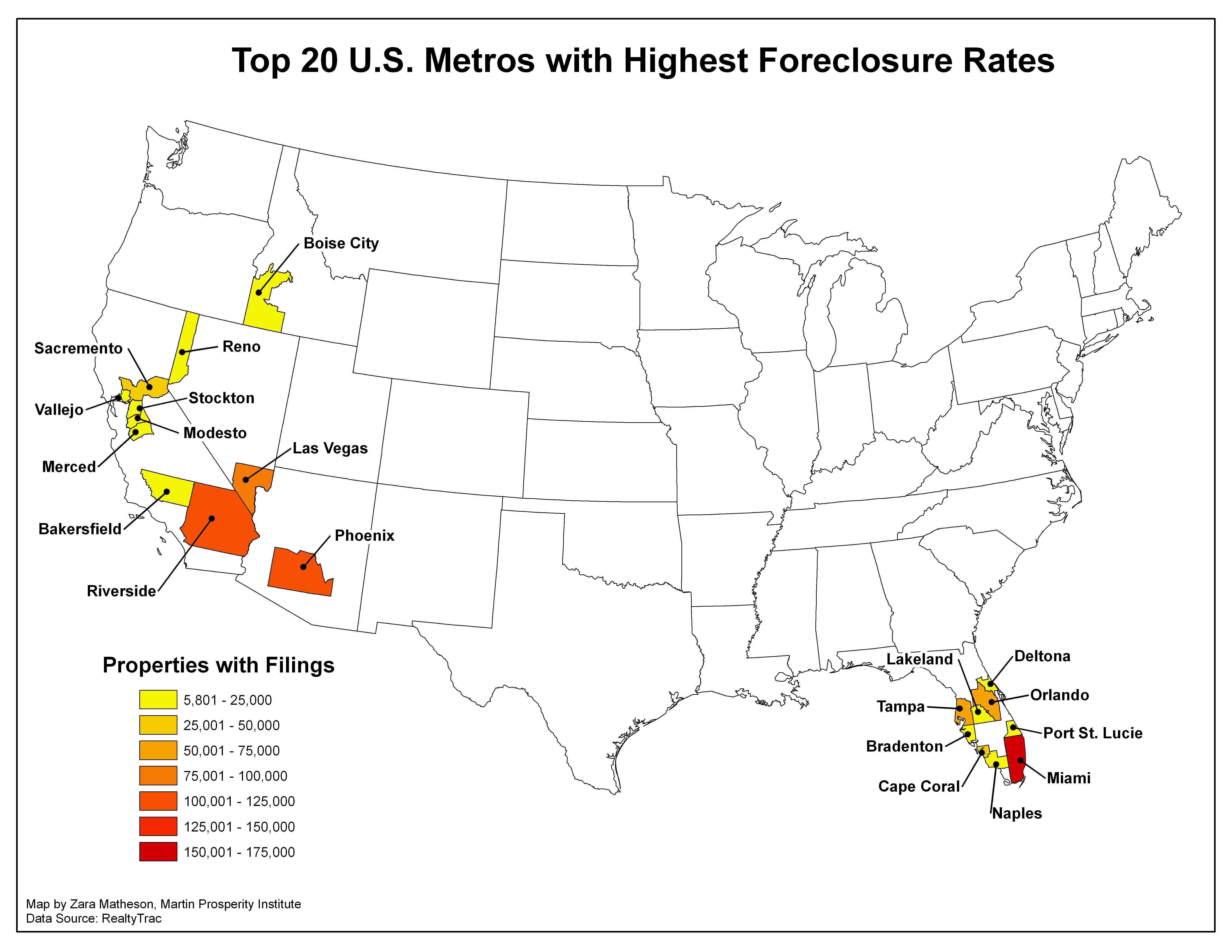
For example, the top three regions hit the hardest by the foreclosure crisis are the following:
Cape Coral-Fort Myers, Lee County, Florida—on the West coast of Florida, south of Tampa—where more than 40,000 foreclosures happened in 2008 alone.
Las Vegas, Clark County, Nevada—over 40,000 foreclosures between 2007 and 2008.
Inland Empire, Riverside County, California—Southeastern California, East of Bakersfield and close to Nevada—69,855 foreclosures during the crisis.
But Census housing data from the respective three counties shows the owner-occupied rate was in decline back in 2006 before the wave of foreclosures hit. Instead of growth in owner-occupied housing, vacancies were on the rise.
Eventually there was a noticeable population exodus from these counties, potentially as prospective homeowners looked elsewhere, but it began in 2010.
Construction Led The Housing Bubble
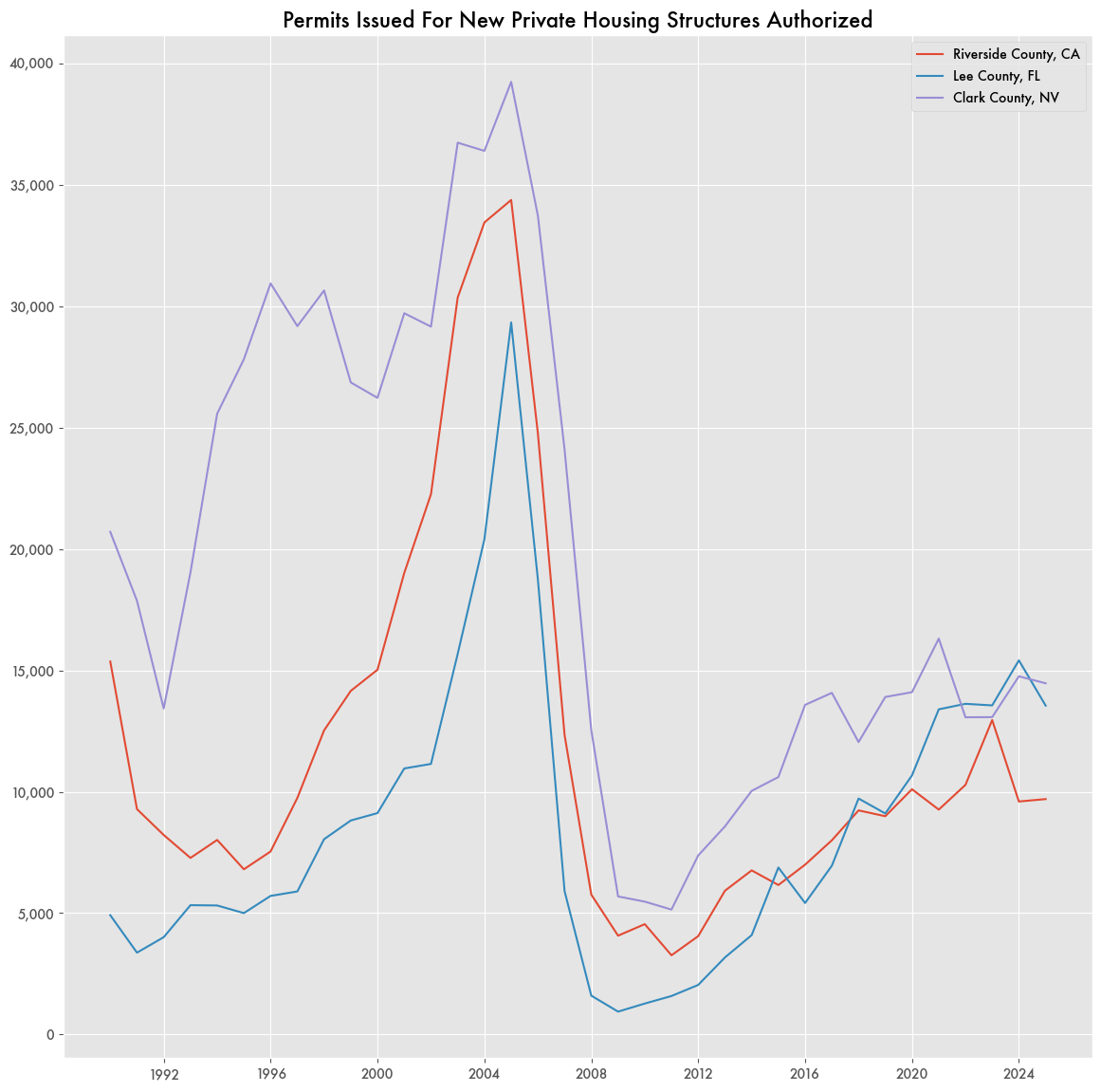
Likely, much of that is simply the result of the new housing construction boom. Housing permits exploded during the bubble, likely taking advantage of low interest rates at the time, and sometimes it takes time for a newly constructed home to be bought and occupied.
Some were likely rented out, as total rental units grew over the time period, more so than owner-occupied housing.
Subprime Borrowers Were Investors and Flippers
Many of these are unsurprisingly subprime loans, which often gets equated with high-interest lending, but subprime lending also just means any loan that doesn’t get securitized by Fannie Mae and Freddie Mac for other reasons, like a lack of documentation or a large-amount, short-term loan that balloons quickly. Which is why the collapse of mortgage-backed securities (MBS) only happened in the private or shadow MBS market and didn’t really touch the financial markets that major pension funds and index funds invest in.
If subprime borrowers were simply a large population of low credit Americans hoping to own a homestead to call their own, the Troubled Asset Relief Program (TARP) was supposed to lend them a hand and keep a roof over their heads.
But TARP didn’t seem to target anybody like that. The largest recipient state was North Carolina—not exactly an epicenter of the subprime crisis—and few recipients listed factors like high interest rates commonly associated with subprime lending as why they needed help. Most simply stated “curtailment of income” as the cause.
So, who were the subprime borrowers then? They bought mainly new houses without mortgages for homes they didn’t live in. When foreclosed upon, they didn’t seek subsidies in any significant numbers.
A large share were investors. According to a 2018 paper from the National Bureau of Economic Research (NBER), real estate investors had their share of mortgage balances double between 2004 and 2007, who then accounted for a large portion of foreclosures that occurred before 2010 and before the significant growth in unemployment:
Real estate investors have higher default rates than regular borrowers and they accounted for close to 50% of all foreclosures at the height of the crisis, even though their share in the borrower population peaked at 14%.
The Investor Speculator Bubble
While the crux of the financial crisis is still the same—that banks handed out subprime loans to those less likely to pay for an unsustainable price on houses—the subprime housing bubble was a remnant of investor speculation and not owner-occupiers looking for a slice of the American dream that defined the TARP bailout.
Movies like The Big Short portrayed the bubble as one of Wall Street wrapping up shoddy mortgages that fed into the major financial markets, poisoning the well of investment and requiring a federal bailout to prevent a catastrophe. But the majority of subprime MBSs lived in the private, shadow securitization market that was separated out from the major markets of Wall Street. Fannie Mae has started dipping their toe into subprime loans right at the beginning of the collapse, but it wasn’t much.
Instead, maybe the best description of the situation is this 2009 New Yorker story, The Ponzi State, which details how Florida is rife with speculative housing cycles not unlike every other speculative financial bubble from tulips to beanie babies.
When interest rates were low, retirees flooded into the state and everybody became a broker, buying up houses on weak credit to flip for a higher price. Tens of thousands of dollars can be made overnight by anybody willing to take out a loan and borrow against personal equity to take a chance on a house they will never live in.
Prices go up and up unless interest rates go up, as they did beginning in 2003, causing short-term flippers to make substantial interest payments, or when pensioners stop moving to Florida.
A very similar situation happened in Florida in the 1920s when swampland salesmen hyped up homes that helped feed into the financial collapse of 1929, leaving semi-empty housing tracts behind.
But at the same time, the fear over subprime lending also helped foment a bank run in places where there wasn’t overly speculative housing construction built on subprime lending.