A previous Investigative Economics story on Maryland’s disappearing budget surplus noted that state financial documents showed the state’s $5 billion surplus disappearing under current Governor Wes Moore’s time in the statehouse since 2023. Moore was criticized for his excessive spending that withered away the surplus, but Moore heavily disputed the allegations.
That detail is still true—that current year budget documents showed increasing expenditures under Moore—but it turns out that Maryland repeatedly revised its historical expenditures after the fact. More recent budget documents now show a sharp increase in spending happening in previous years under Moore’s predecessor, Larry Hogan, who left office at the end of 2022.
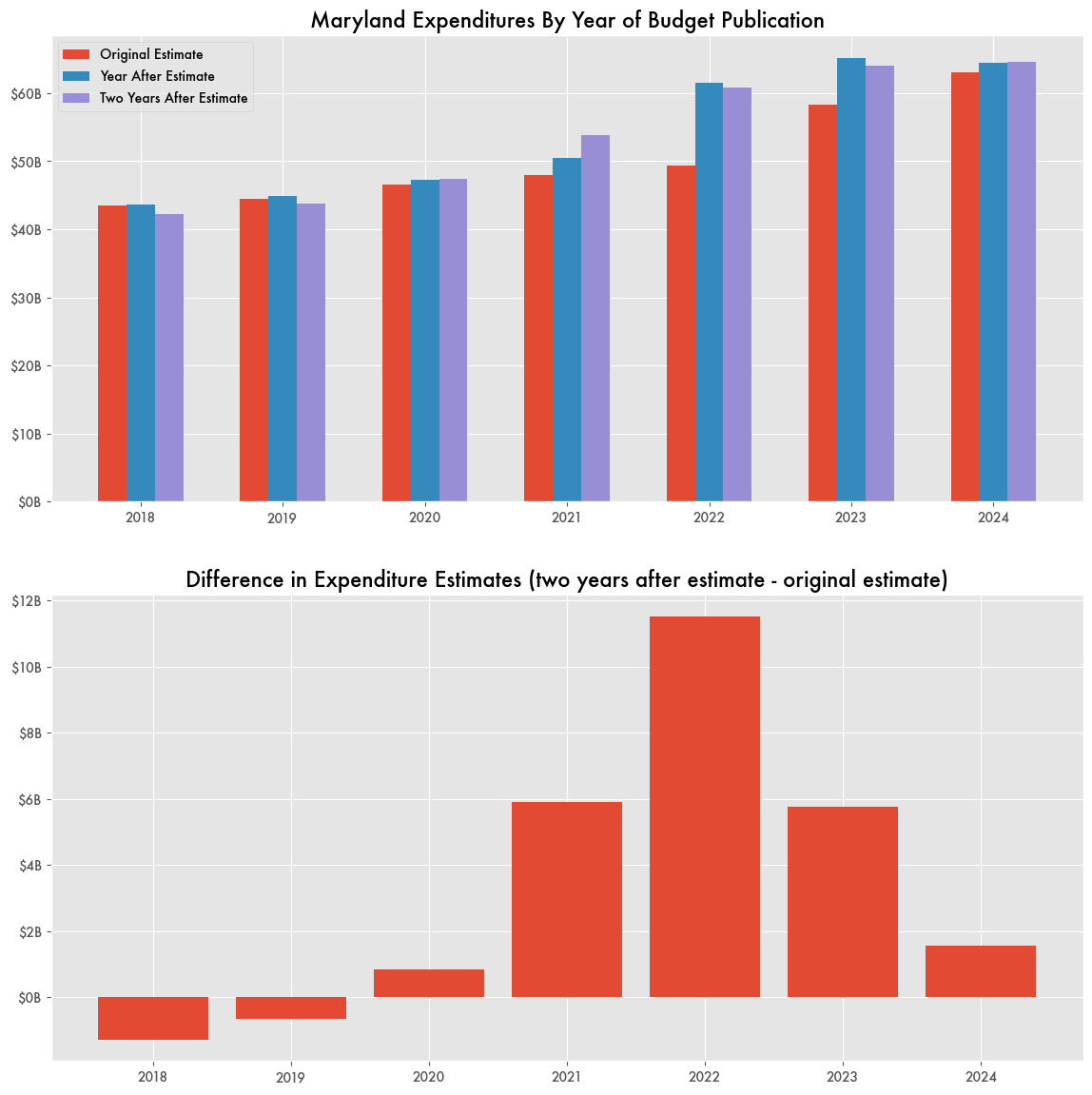
For 2021 through 2023, total state expenditures would be revised upwards by between $5.8 billion to $11.5 billion a year. What was originally $49 billion in spending for 2022 eventually landed at $61 billion based on budget documents published in 2025.
By 2024, the revisions were done and expenditure estimates published in 2026 were effectively the same as what they were when published in 2024—within $1.6 billion.
In general, budgets regularly get adjusted because of unknown expenses at the time, line items that get ascribed to the different years, or inconsistent accounting. Accounting standards usually define materiality thresholds for error based on what kind of metric is being measured—e.g. assets, income etc..—that all range within 10 percent.
But a 23 percent adjustment as the case for Maryland in 2022, would go substantially beyond that. Budget documents detail that Maryland held a budget surplus post-COVID-19 because of federal relief spending, but lackluster growth had eaten into that surplus.
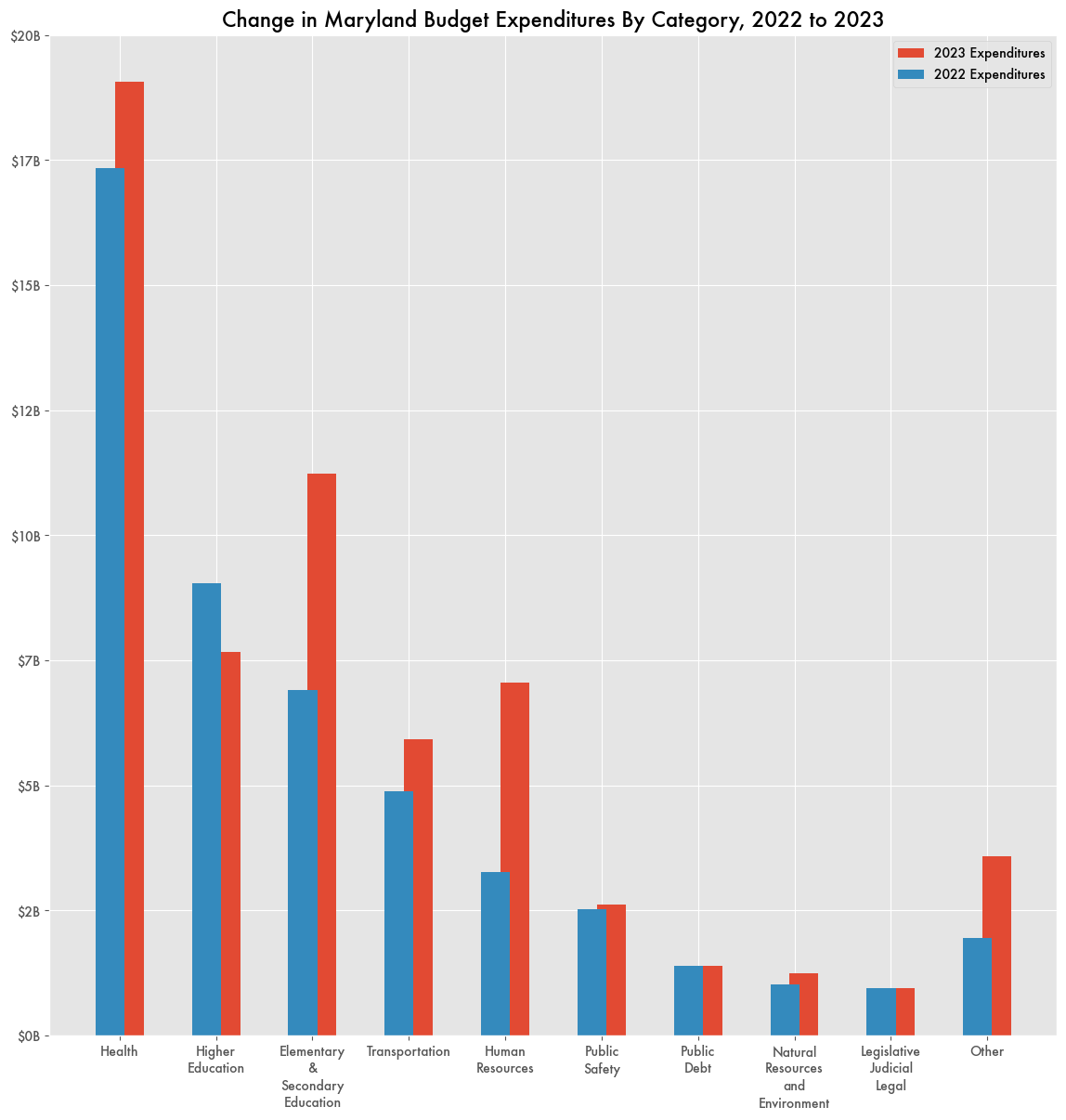
Not only were expenditures restated, but they were substantially higher than previous years, by $15 to $20 billion. In particular, additional billions were moved into Elementary & Secondary Education, Human Resources, and Health.
Spending on Schools
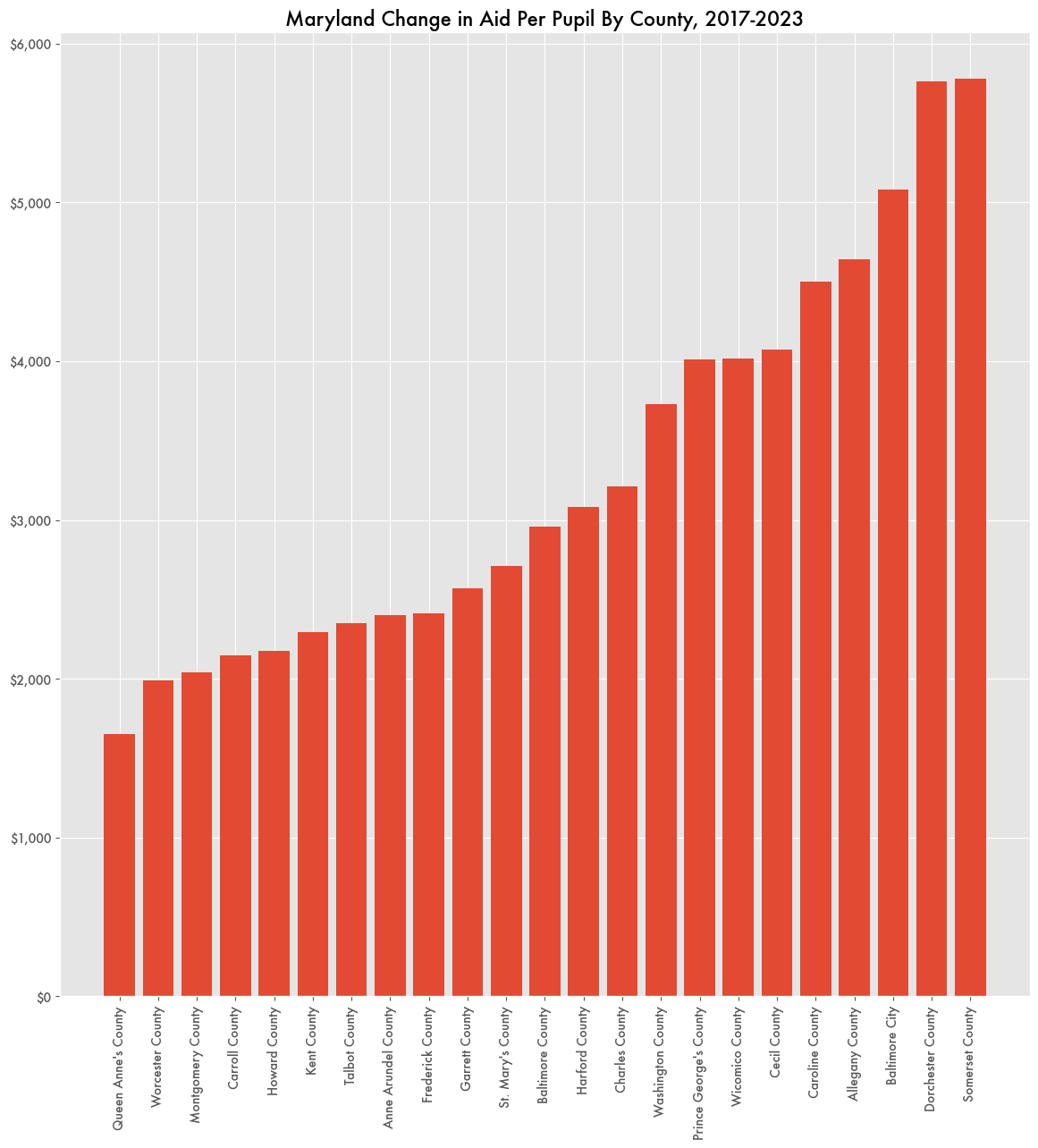
Of the additional $4.3 billion put into elementary and secondary education—a 62 percent increase in state subsidies—most of it went to Baltimore, with an additional $126 million split between Baltimore City and Baltimore County.
Frederick County was next with an additional $44 million, although that was largely because the county has seen a large upswing in population. On a per pupil basis, it was somewhat further towards the back.