The sharp growth in the U.S. prison population beginning in the 1970s is said to only have a “weak” effect on the crime rate. Despite quadrupling the prison population over a few decades, it didn’t deter crime enough to warrant upending thousands of lives through additional incarceration, much of it related to drug use.
The increase in incarceration may have caused a decrease in crime, but the magnitude is highly uncertain and the results of most studies suggest it was unlikely to have been large.
Crime rates exploded in the 1960s, a lot of it related to the proliferation of heroin and guns against a background of civil strife, some related to deinstitutionalization—the shift away from hospitals and asylums for treatment of mental health and towards independent treatment and prescription drugs.
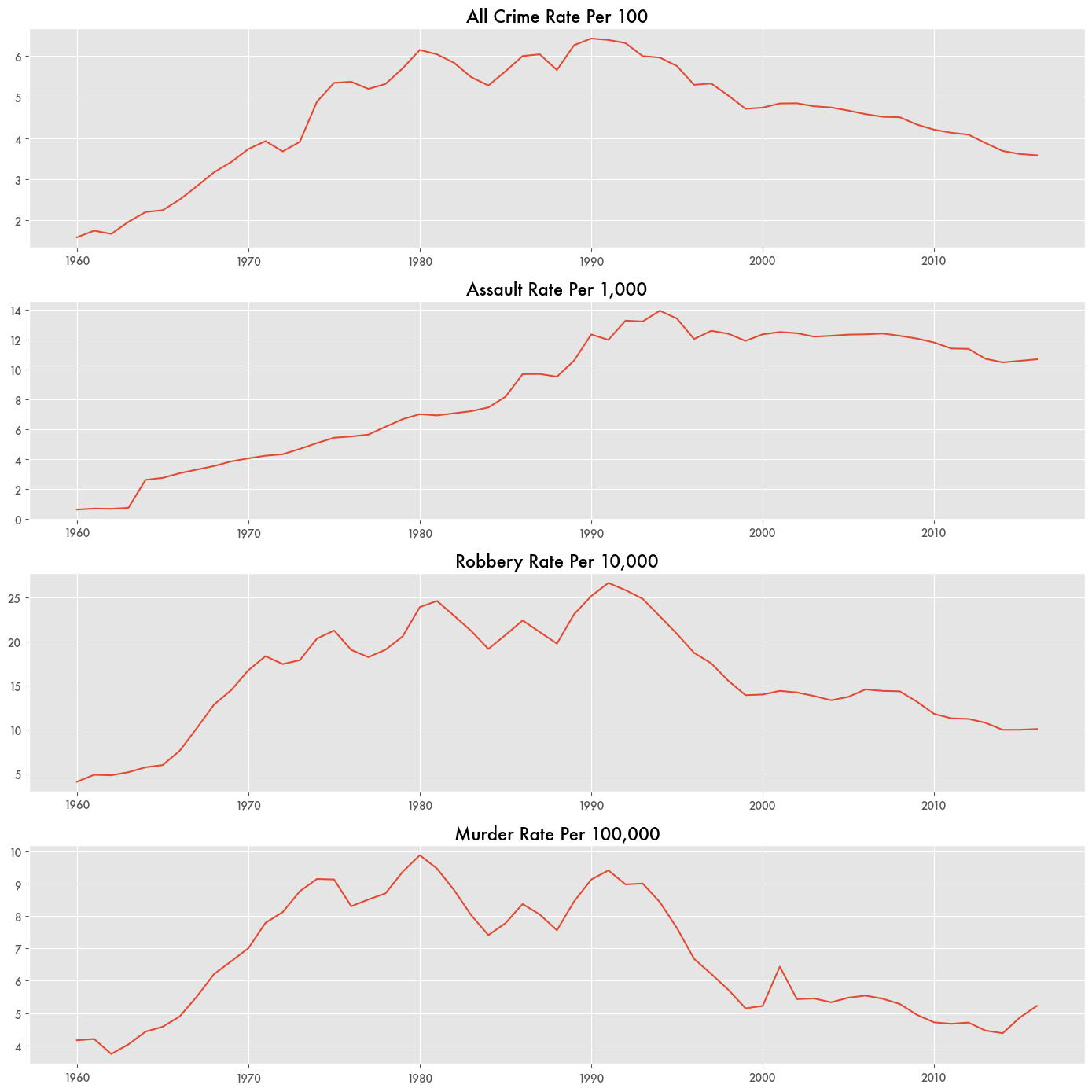
Within ten years, murder and assault rates doubled. Robbery rates tripled. Drugs were considered the major culprit. In 1970 Congress passed the Comprehensive Drug Abuse Prevention and Control Act, which created the illegal drug scheduling system, to limit access to pharmaceutical drugs that can be abused.
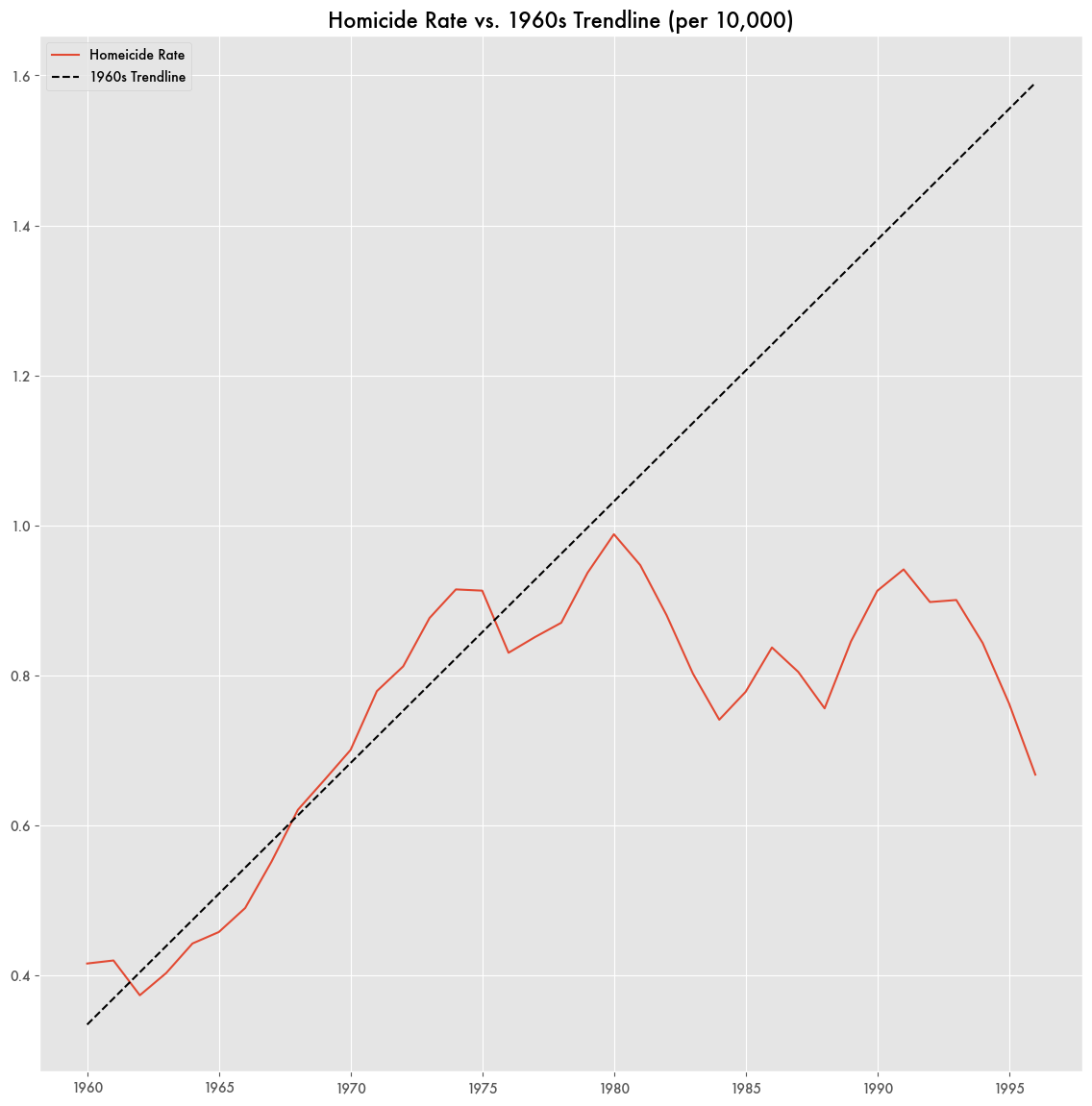
Once it was revealed that 10 to 15 percent of servicemen in Vietnam were now heroin addicts, president Nixon declared a “war on drugs” in 1971. In 1973, the Drug Enforcement Agency was established. Other measures like the Rockefeller drug laws in New York would have a similar effect at the state level. The percentage of state and federal inmates received annually for drug law violations would go from 2.5 percent in 1940 to 9.3 percent by 1980. That would add to the overall incarceration rate, which would grow four-fold between 1970 and 2000.
Yet crime rates stayed elevated into the 1990s as various American cities battled for the title of global murder capitol. It was only in the early 1990s that crime rates would drop significantly, first in New York City, but then suddenly across the country in 1994, particularly for homicide.
Various inconclusive theories have attempted to explain the sudden drop, from lead exposure to abortion laws, cocaine markets, three strikes laws, and the elimination of discretionary parole.
But while the drop in crime in the 1990s was sudden and seemingly inexplicable, the overall crime rate had been slowing down going back to the mid-1970s following the war on drugs and start of mass incarceration based on data from the Federal Bureau of Investigation’s Uniform Crime Reporting program and prisoner data from the Bureau of Justice Statistics.
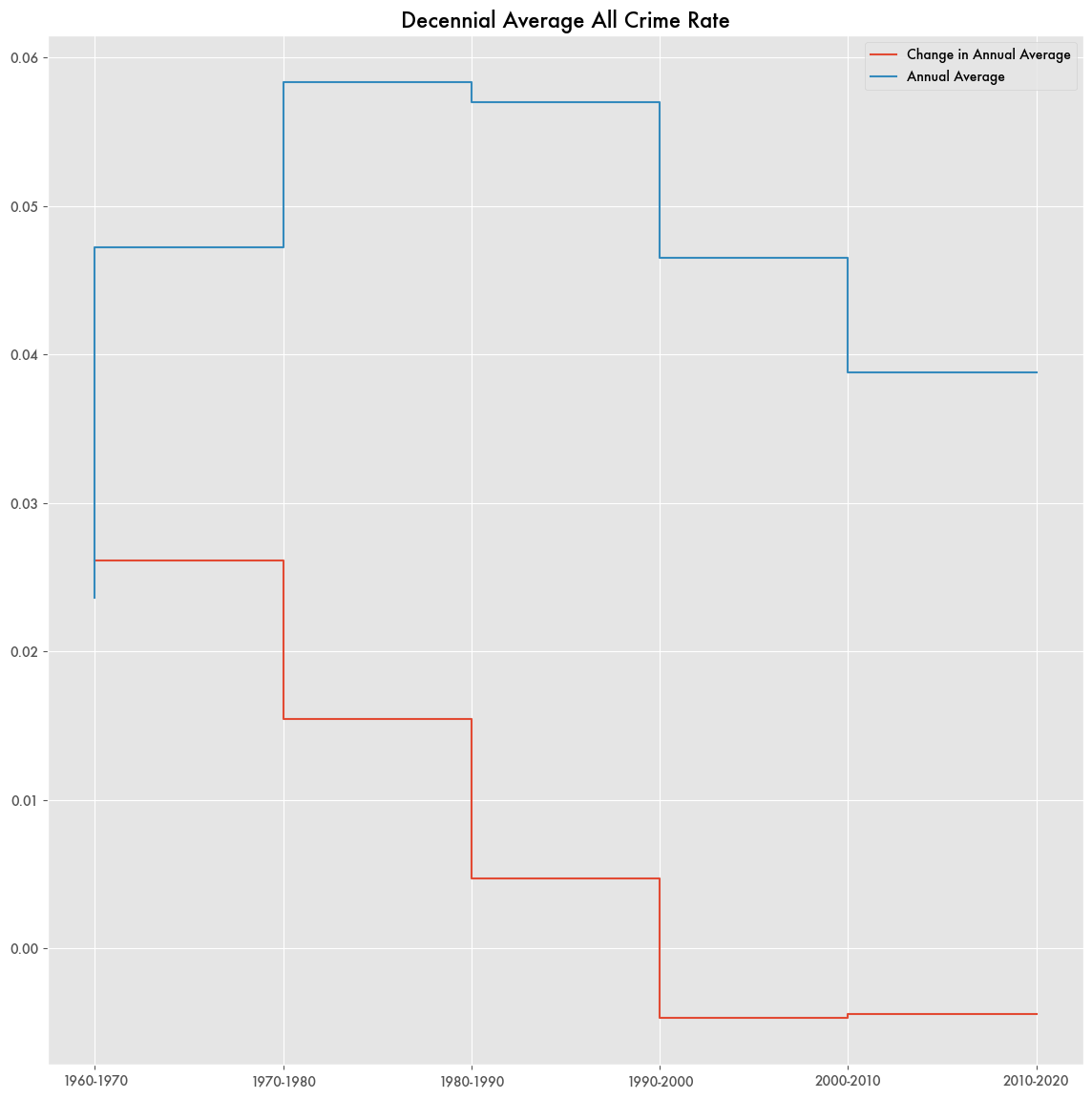
Crime rates might not have declined significantly right away, but the upward trajectory stopped and the overall the trend was downward beginning in the mid-1970s, particularly for homicide and robbery.
Crime Rates Stopped Growing
Crime didn’t immediately come to a halt, but the sharp growth in crime plateaud—whether by way of incapacitation, intimidation, or simply by coincidence—a few years after more people were being thrown in prison en masse.
Prior to 1975, the total crime rate increased annually by about 1 per 10,000, doubling over the course of ten years. Ten years later, by 1985, the prison population had doubled and the crime rate stopped growing altogether.
Homicide Rates
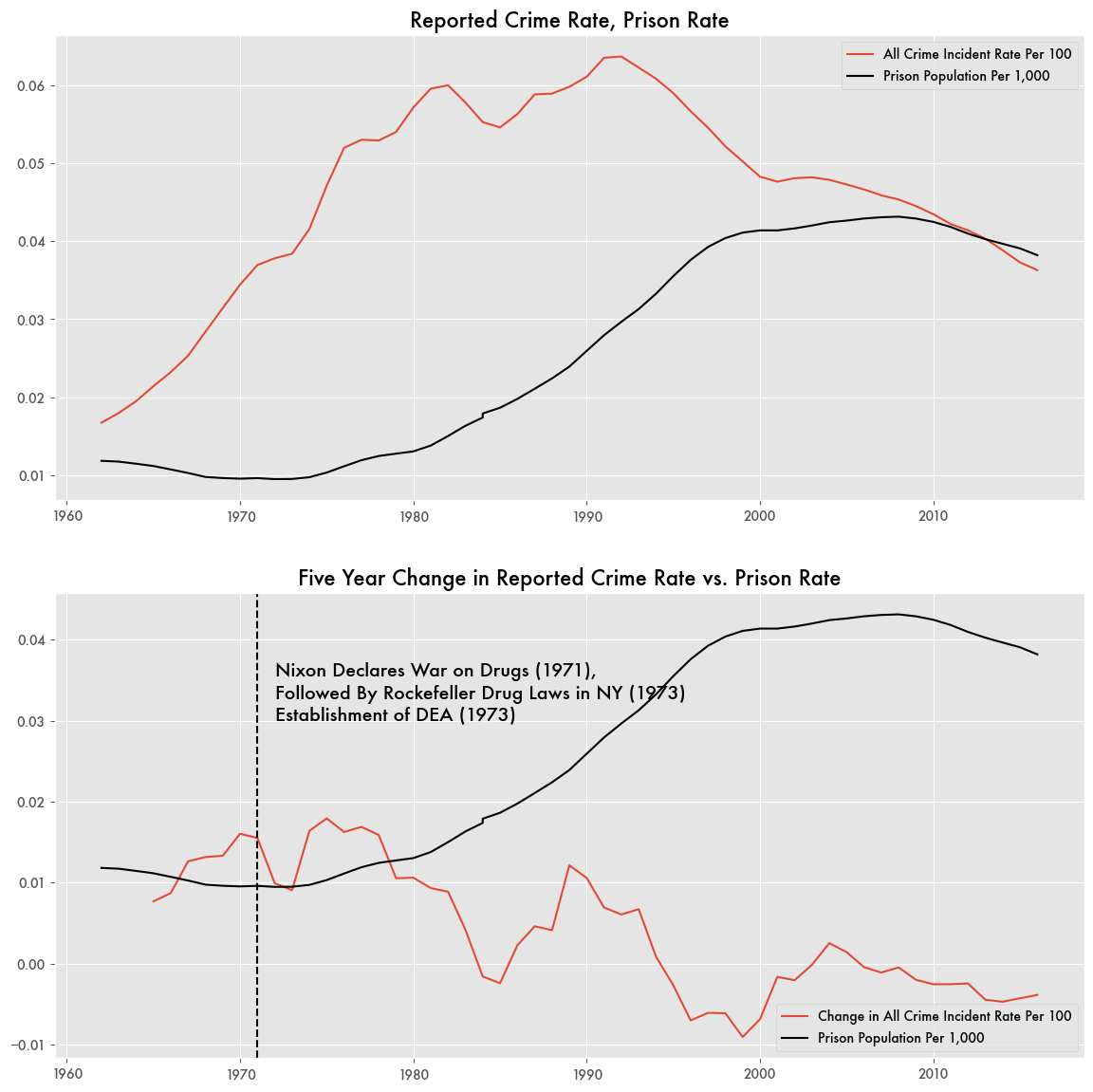
After growing year over year through the 1960s, the homicide rate dropped in 1976—the first time in 14 years and only a few years after prison rates started growing—trending downwards after that.
If the murder rate kept going as it had been in the 1960s, by 1994 it would have been twice as high as it was—not a weak effect.
Decennial Trend
Because crime rates are somewhat volatile—they can vary from year-to-year—it’s better to look at crime trends over the course of a decade. And there it’s easily visible how the average annual crime rate over the course of a decade initially started declining in the 1970s.
Prison Rate Eventually Followed Crime Rate
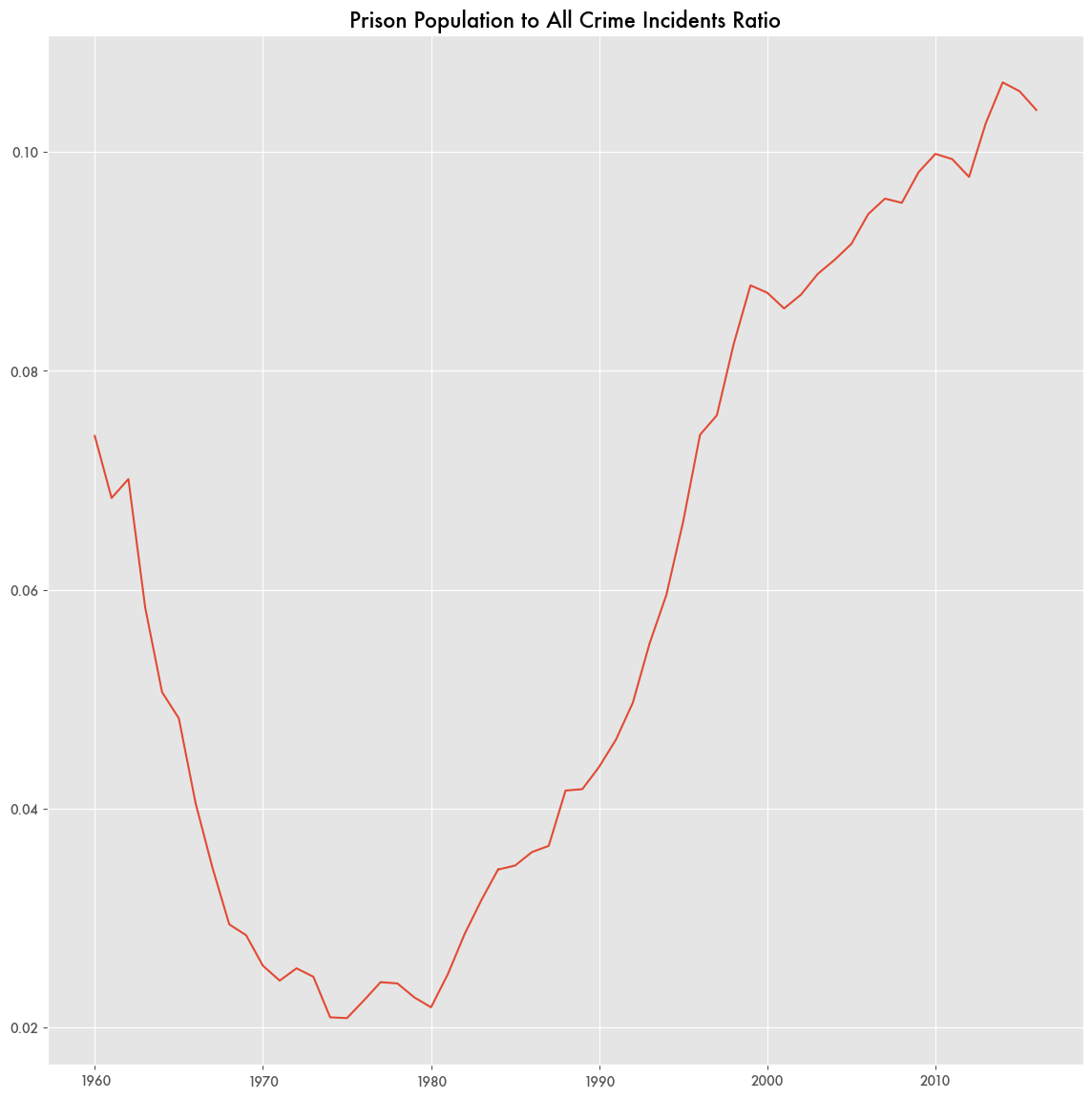
While the 1970s is considered the beginning of mass incarceration, when considering the ratio of prisoners to crimes, it was at a relative nadir. That is, what might be considered large-scale incarceration existed prior to the 1960s. When crime grew in the 1960s, the incarceration rate just didn’t keep up.
With increased imprisonment, the ratio of prisoners to total crimes in the 1990s was effectively the same as what it was in the early 1960s before crime rates exploded.