According to a 2023 article from the NPR affiliate KQED, San Francisco’s then-rash of car break-ins were being enabled by a loophole in the law that required prosecutors to prove that the car was locked beforehand. Parked cars across the city were constantly having their windows smashed and items stolen. Supposedly the city could do little to stop it.
According to current San Francisco district attorney Brooke Jenkins, the vast majority of those incidents had not been prosecuted.
“My prosecutors could go into court today even having an eyewitness to an auto burglary, but without having an individual who owns or possesses the car say they locked the doors, could be required to dismiss the case,” Jenkins said.
The city’s roughly 11,000 break-ins in the first half of this year resulted in just 86 felony auto burglary cases, about half of which actually ended in a conviction, Jenkins said. Many of those incidents happened in popular tourist destinations like the Marina District, Fisherman’s Wharf and near Civic Center.
A bill by state representative Scott Weiner would close that loophole (SB 905), something that he had been trying to pass for a few years, and it eventually passed in 2024 as section §465 and was effective starting in 2025.
While car break-ins were a huge concern for San Francisco a few years ago, almost none of the rest of that is true.
Based on numbers from DataSF, most auto burglaries have been, and continue to be, prosecuted under the section of the law that contains the loophole about requiring car doors to be locked—section §459. Over 80 percent were prosecuted in 2021 under that law, and 88 percent were prosecuted in 2025 when the new law passed.
If anything, there’s been a sharp decline in auto burglary arrests since 2019, years before the loophole was closed potentially following a sharp decline in incidence.
A San Francisco Chronicle story noted the sharp decline back in 2024 due to increased police enforcement, although that may not be totally accurate as arrests have been in continuous decline since 2020.
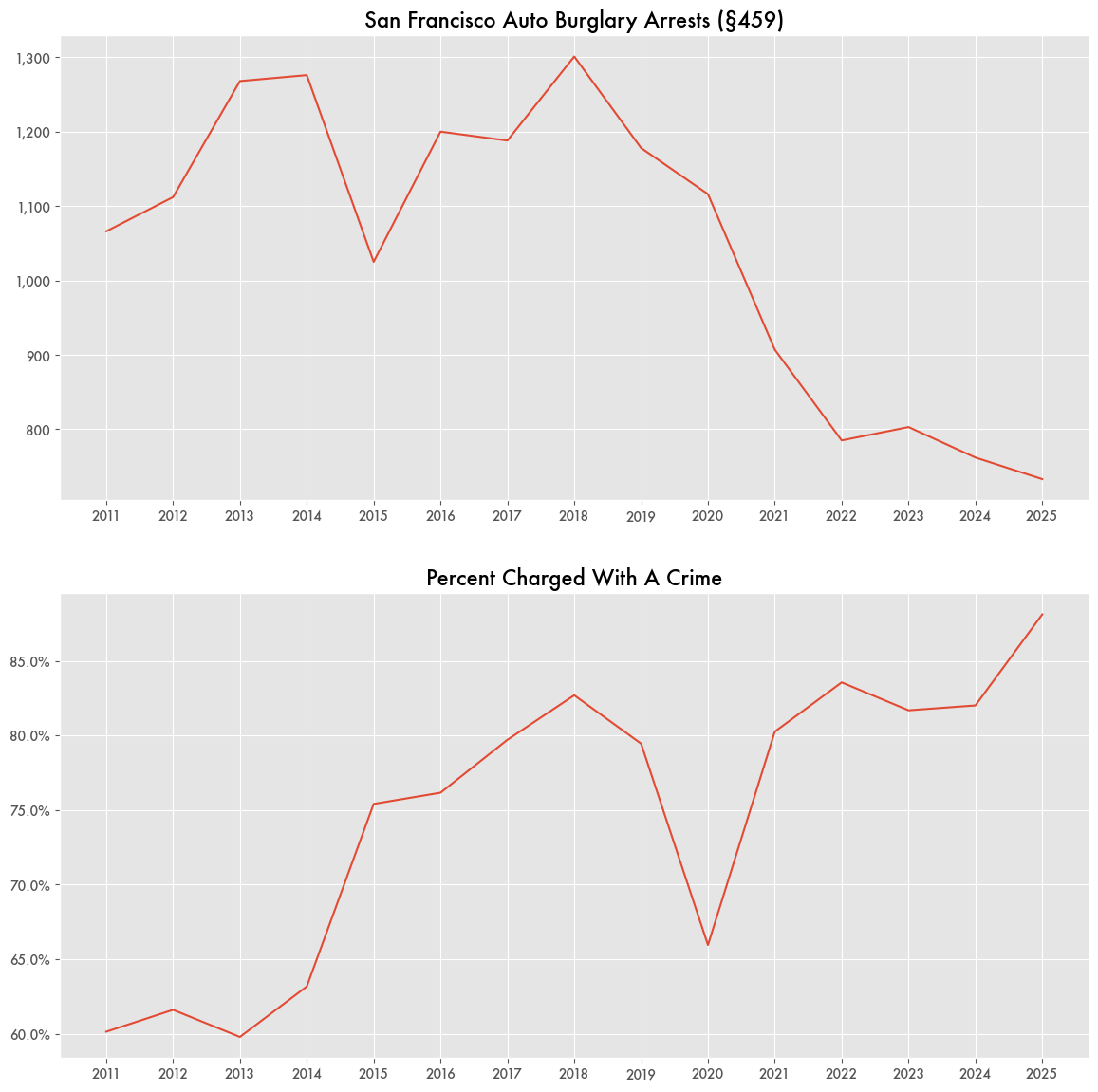
Similar Conviction Rate to All Burglaries
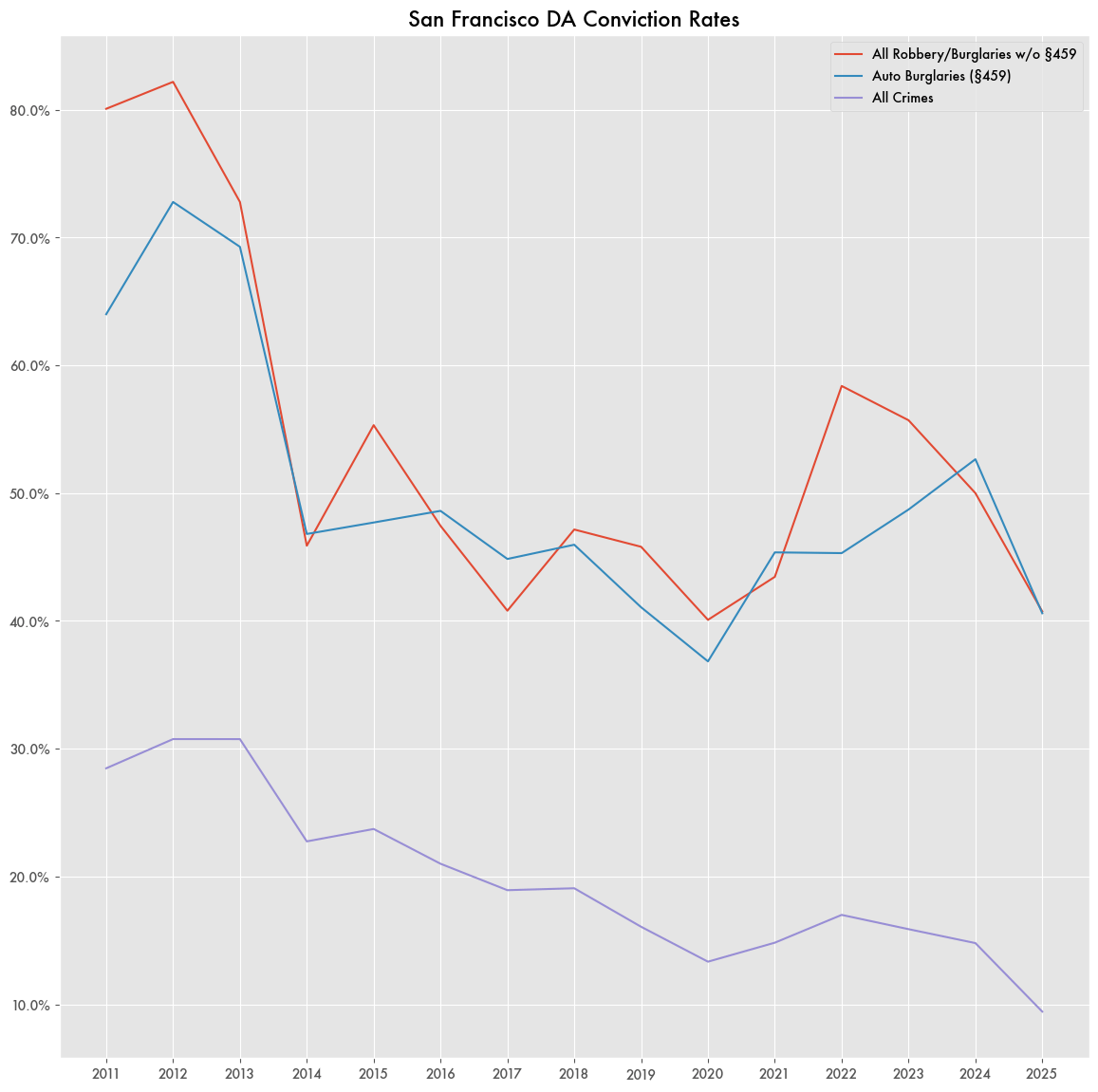
While the number of cases and arrests have plummeted, conviction rates under the old law remain about the same.
If the loophole somehow affected prosecution success—rather than whether charges were brought as Jenkins described—then conviction rates for that statute would ostensibly be low.
But conviction rates under section §459 are almost exactly in line with conviction rates for all types of burglary and robbery that aren’t automobile-related—varying between 40 and 60 percent.
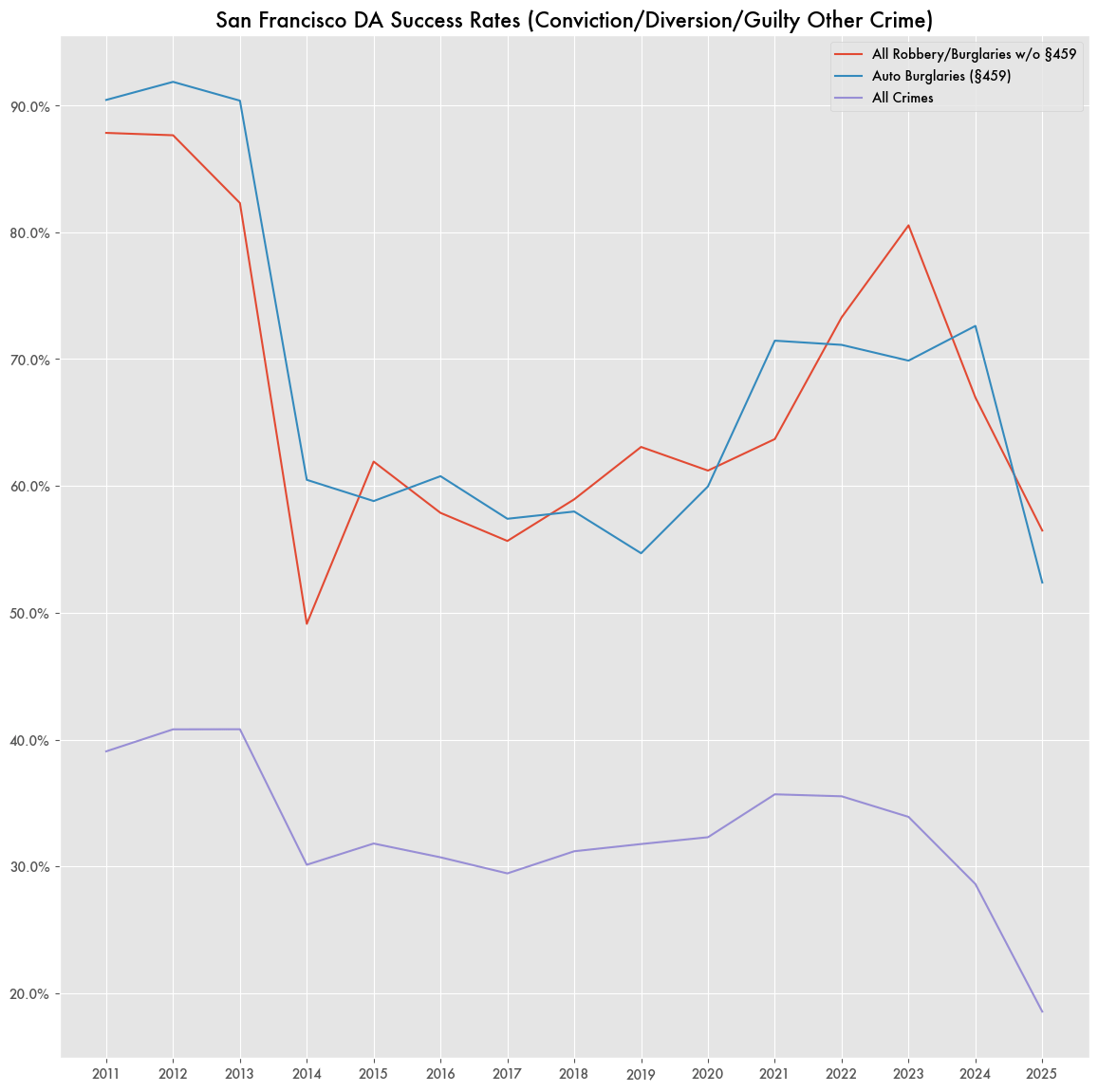
Conviction rates solely refers to total convictions and does not include other potential outcomes in favor of prosecution, such as diversions or pleading guilty to a separate case. But even when considering those other conclusions, auto burglaries have had similar outcomes to other burglaries, and they are regularly prosecuted successfully.
The new law (§465) could certainly improve upon those numbers, although the data currently only shows seven cases to be prosecuted under the new law. As it was only passed in 2025, it’s still early and there is little data available on its effects.
Ongoing Prosecutorial Issues
Besides auto burglaries, the San Francisco district attorney’s office appears to have significant issues with conviction rates for all crimes as well as an increasing number of fugitives.
Robberies and burglaries used to have conviction rates almost twice as high as they currently do. The overall conviction rate used to be around 30 percent rather than current rates around 10 percent.
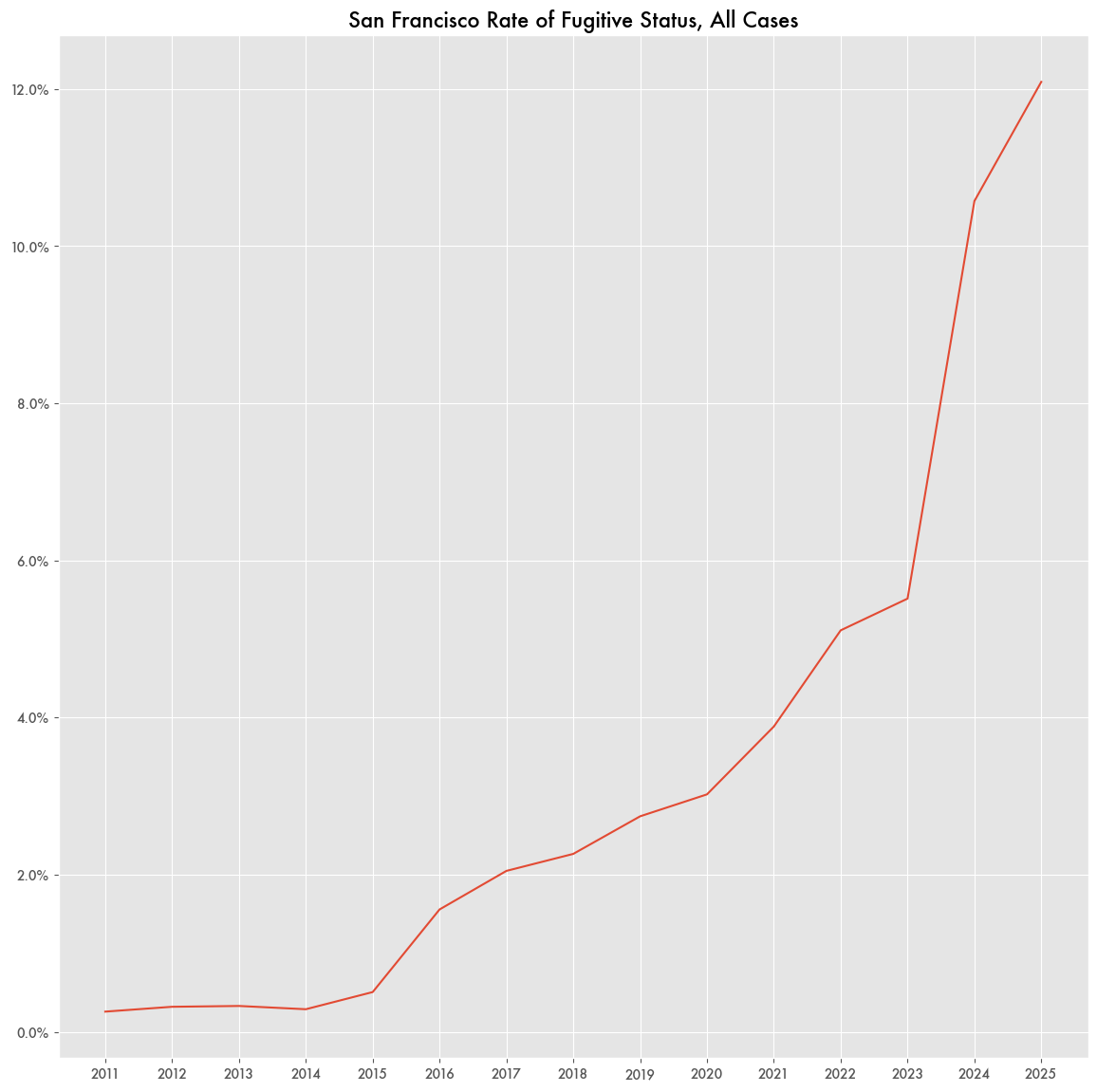
The number of cases left on hold because the defendant absconded and is now considered a fugitive is now around 12 percent a year when it used to be less than one percent. Then there’s a separate issue of Jenkins dropping narcotics cases.