
The Anacostia River Tunnel project is one part of Washington, DC’s Clean Rivers program, that aims to make the city’s waterways healthy enough for recreation and compliant with the Clean Water Act.
A grand undertaking, it involved digging a giant underground rainbarrel and a 2.4 mile long tunnel along the river that would ingest thousands of gallons of sewage and stormwater runoff and direct it to the city’s nearby wastewater treatment plant. It would halt the pollution from combined sewage overflows (CSOs)—when excess rainfall overwhelms the sewer system and the overflow goes straight into the river. CSOs are estimated to be the largest contributor to fecal coliform bacteria in the water like Escherichia coli, otherwise known as e.coli.
DC has already borrowed $3 billion for the complete Clean Rivers project through bond offerings, with $253 million spent on the Anacostia River section alone and the tunnel boring machine, nicknamed “Nannie”, costing $25 million.
The vast majority of the Anacostia tunnel was completed in 2018 and is considered a success for preventing 90 percent of CSOs from entering the river, including 19.5 billion gallons of wastewater and 12,265 tons of trash.
Yet despite its success on CSOs, the Anacostia river now shows e.coli levels in the river surpassing Environmental Protection Agency (EPA) standards sometimes two to five times more often than before the tunnel was available based on data from D.C.’s Department of Energy and Environment (DOEE)’s water quality reports to the EPA. The upper Anacostia is now out of compliance a full 92 percent of the time with respect to e.coli when it used to be within range under 40 percent of the time.
Water quality measurements are done across a range of times and locations to avoid bias from isolated, short-term affects like rainstorms and then averaged using a geometric mean. Not all Anacostia measurement locations provided data for the 2018 to 2023 report.
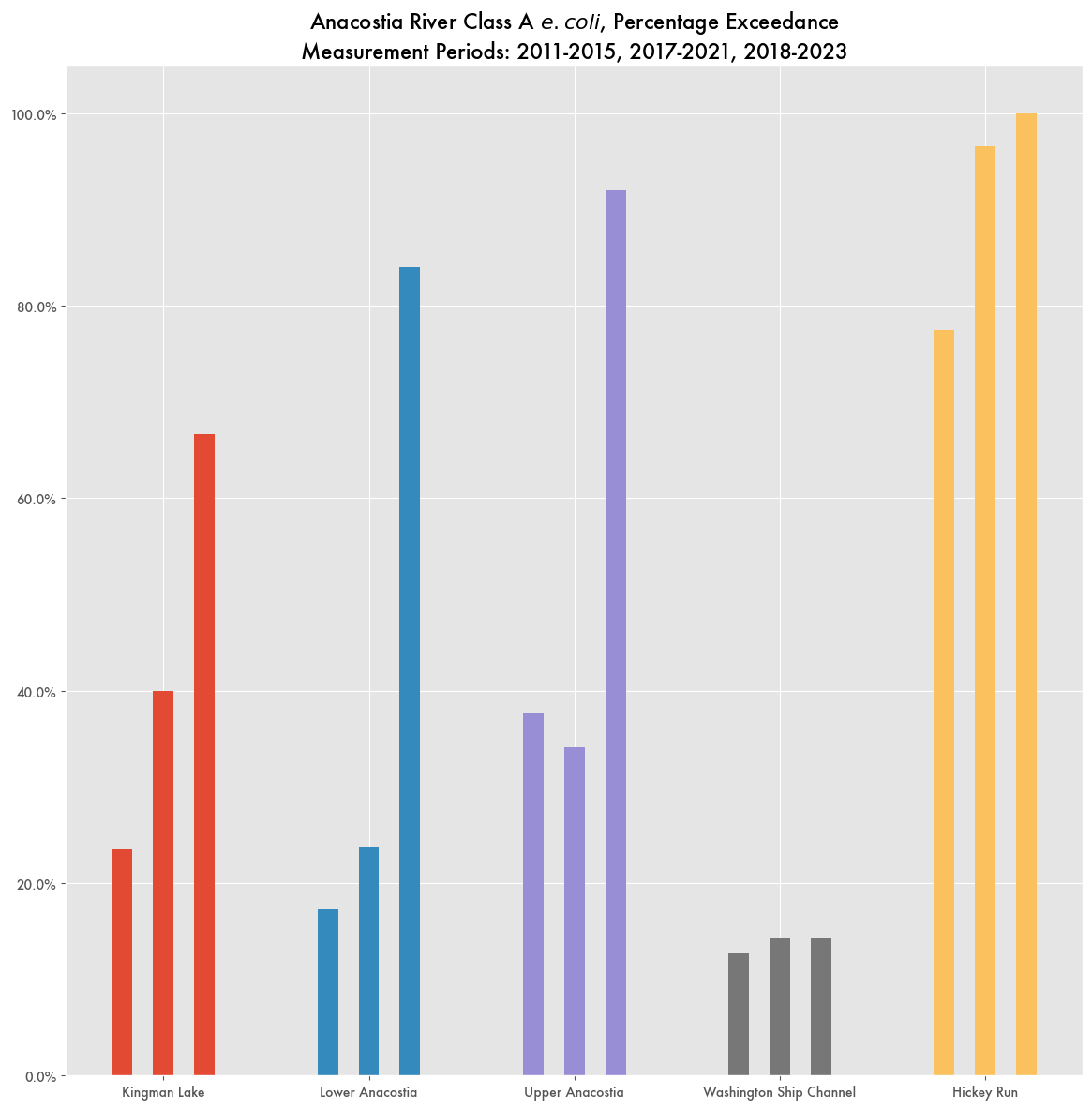
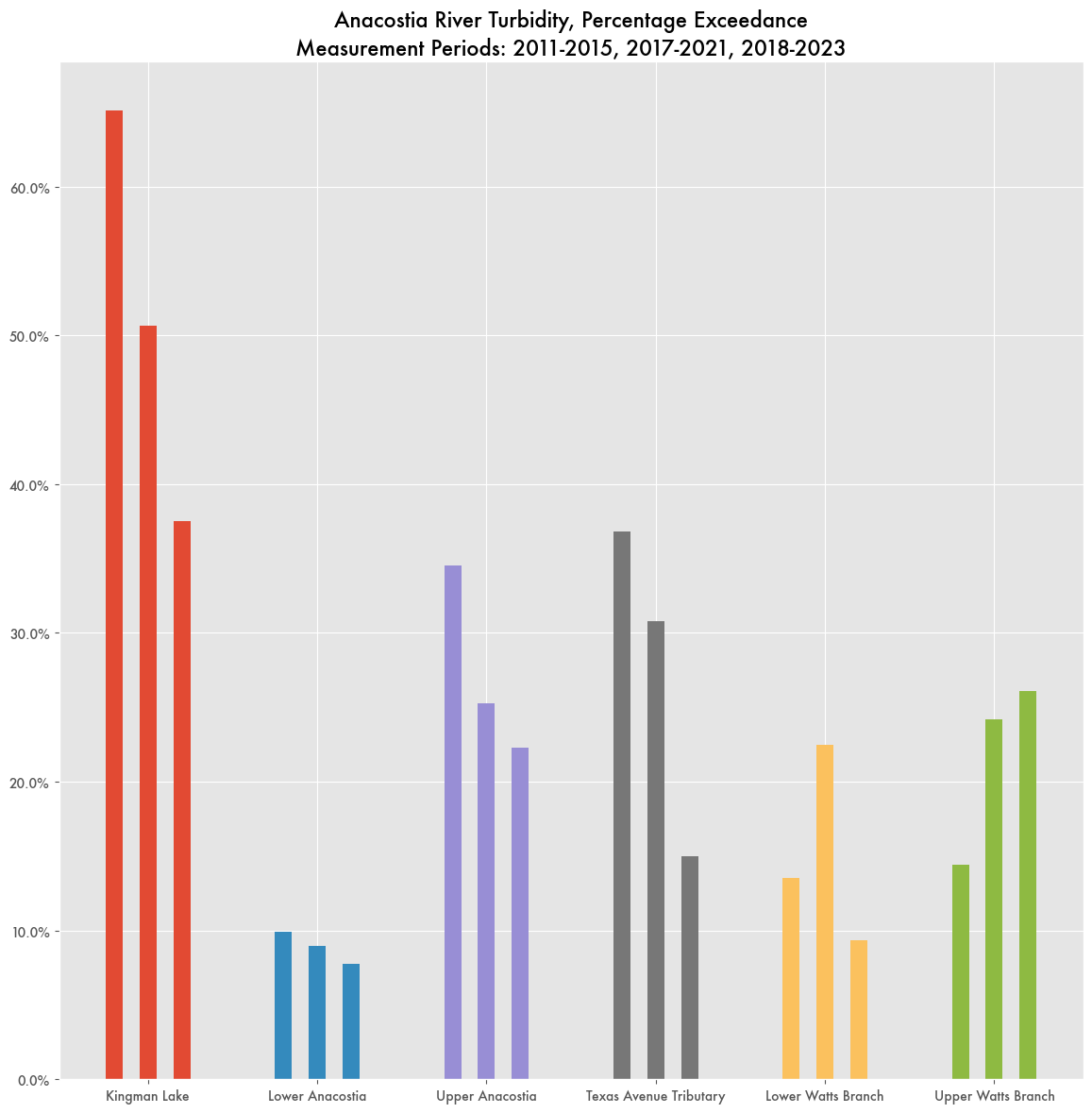
How that is possible despite the cessation of sewage overflows is an open question. The tunnel project appears to have generally improved other metrics of river health like turbidity, dissolved oxygen, and pH.
Potentially Failing Pipes
A 2022 report from Anacostia Riverkeeper gives a different perspective based on their own independent sampling:
For the single sample primary contact standard, Kingman Island (AR3), Buzzard Point (AR-6), and The Washington Channel (AR-7) passed 90% of the time or more. Given their high passing rates, these sites could be good locations to promote recreation.
But at the end of the report, it also admits what might be the source of the problem outside of CSOs:
The high bacterial loads in some of these streams on wet days could indicate more than overland contamination - perhaps a sewer line has been improperly connected to the storm system.
Similarly, the DOEE reports don’t particularly highlight the problem of growing e.coli in the Anacostia, but it is buried in the text:
Chronic E. coli percent exceedances continue to be a problem for the majority of the District’s waterbodies. Fluctuations in these constituents are due to various factors, such as weather and subwatershed activities and conditions, including failing sewer pipes and illicit discharges.
A failing pipe is also what led to the recent breakdown of the Potomac Interceptor, a large junction for wastewater near the Potomac River near Washington, DC. The ensuing spill released 240 to 300 million gallons of untreated sewage into the river and is potentially one of the worst sewage spills in U.S. history.