PJM—the major regional transmission operator (RTO) for the mid-Atlantic—has repeatedly stated that energy bid prices are too low, causing potential generators to sit out of auctions, leading to thin margins between demand and capacity. That in turn leads to price spikes during periods of sudden demand. During the 2024/2025 base residual auction, capacity prices hit the lowest value in PJM history at $28.92 per megawatt-day.
With the flood of electricity demand coming from data centers in the last few years, capacity auction prices have multiplied 10-fold, with the 2025/2026 base residual auction (BRA) hitting a maximum of $269.92 per megawatt-day clearing price. The spike in prices has trickled down to retail customers who have been hit with larger electrical bills, adding to the protests against data centers.
But even those auction prices may be too low:
PJM has been working with The Brattle Group to update its estimate on the Cost of New Entry (CONE). This work has demonstrated that the $269.92/MW-day clearing price from the 2025/2026 BRA falls well short of updated estimates of CONE. As a result, for the capacity market to adequately support new entry past the 2028/2029 Delivery Year, prices need to be significantly higher than what was produced by the 2025/2026 BRA.
A previous story on Investigative Economics highlighted how much of PJM’s total capacity was unreliable. Recent growth in capacity was just nameplate capacity and largely came from renewables as coal plants have been retired. When weighted for actual generation, little net capacity had been added to the grid over the last decade.
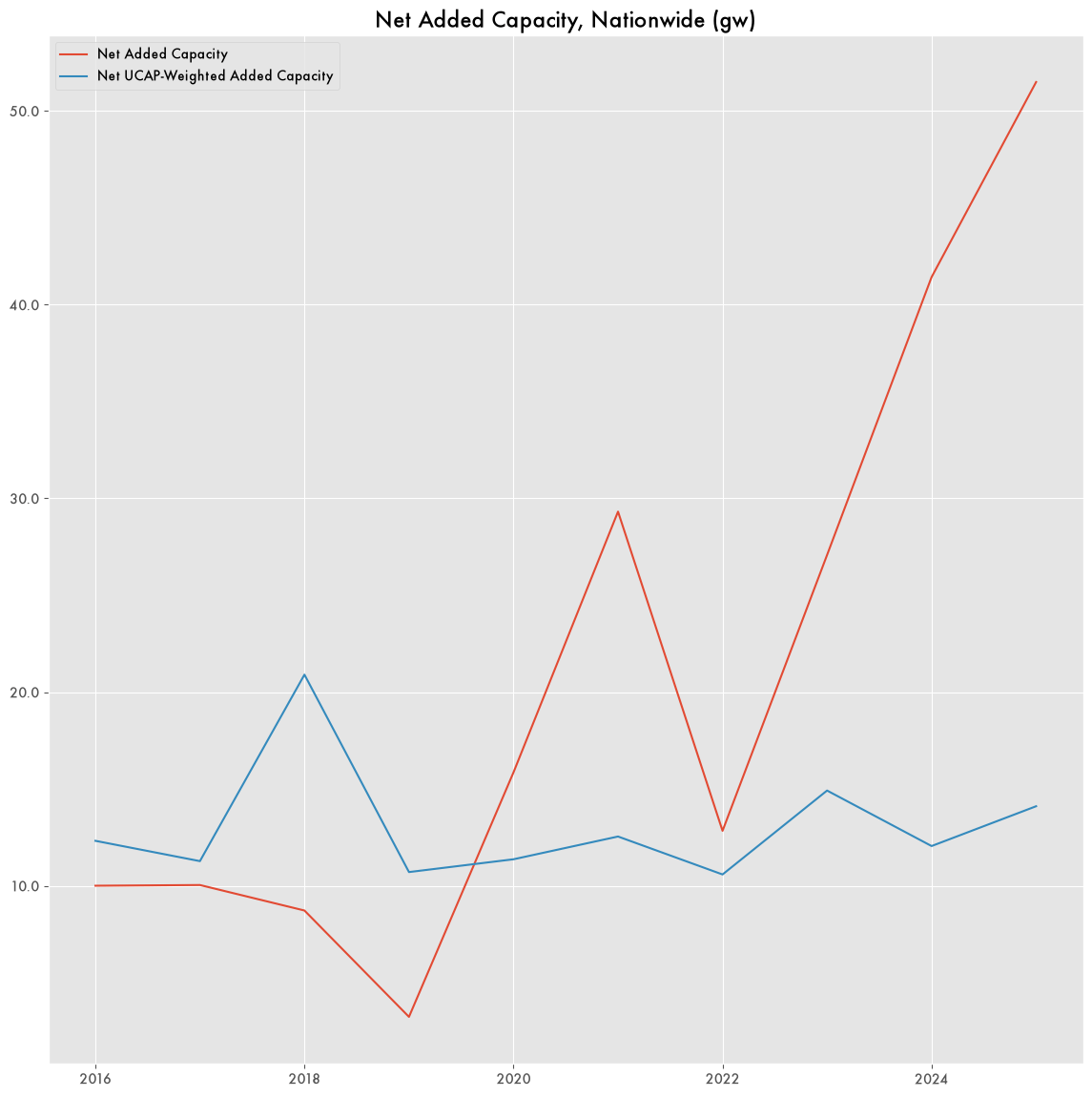
And the same applies nationwide. Based on Energy Information Administration (EIA) data, net capacity—when weighted by unforced capacity (UCAP)—has been flat despite growth in total demand. And that growth in demand is expected to be significant.
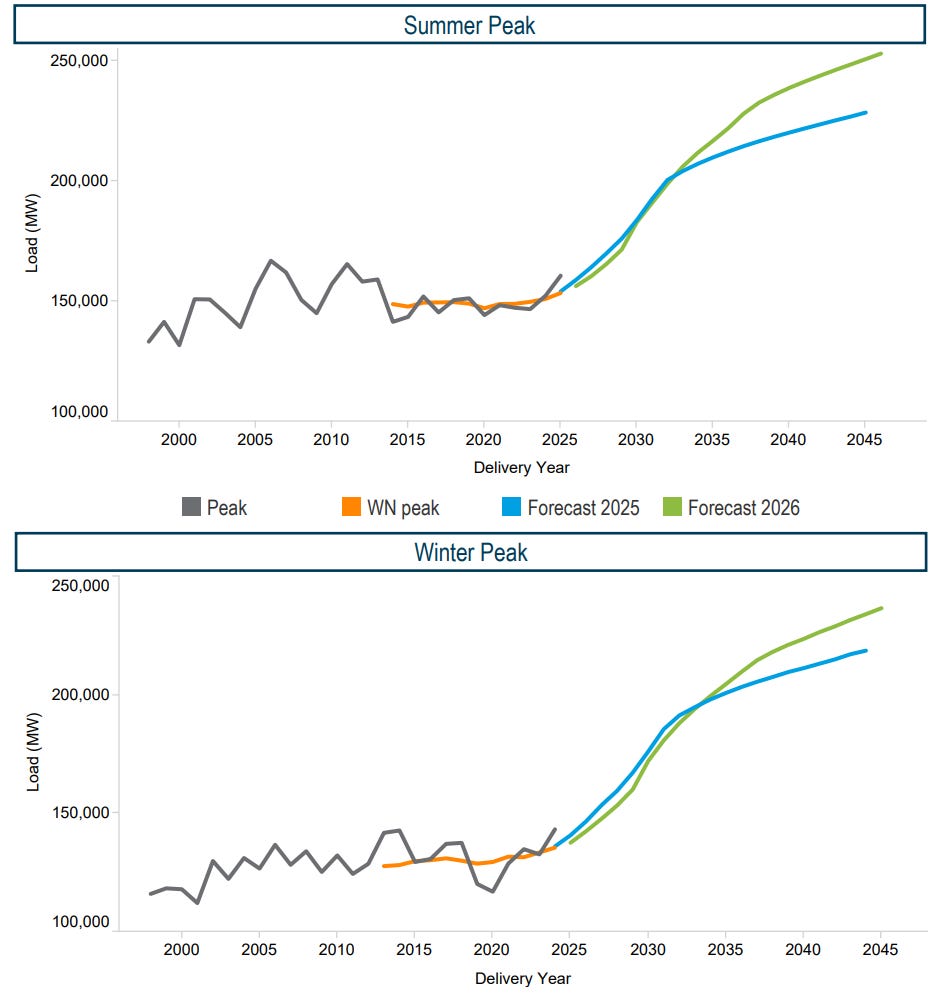
EIA estimates that peak demand will grow around 33 percent in the next five years, not just for peak summer demand but winter as well.
Few Gigawatts Coming Online
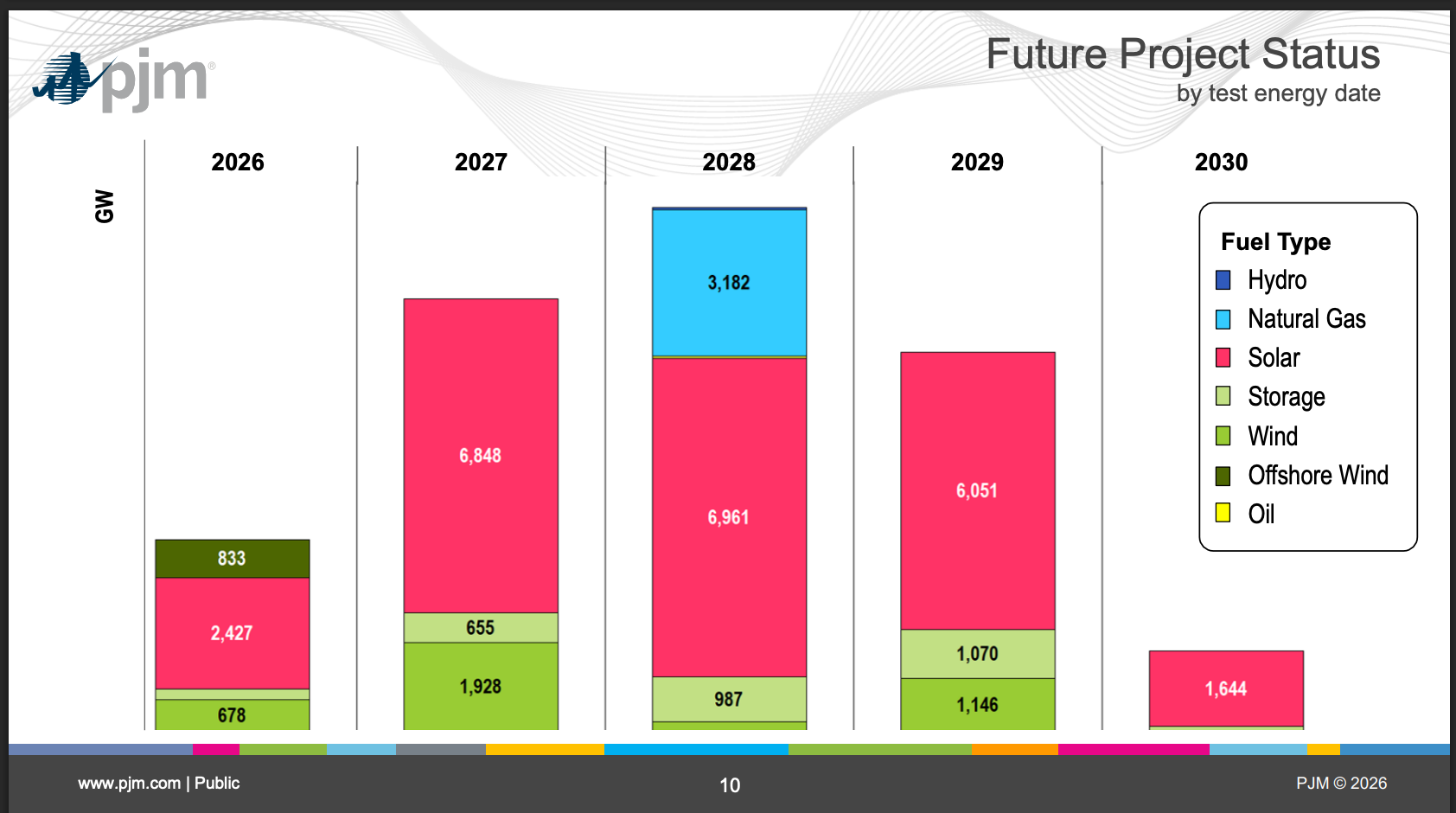
There also appears to be little growth in generation on the horizon. In 2023, PJM reported 15.372 gigawatts of capacity under construction across 365 projects prior to the sharp uptick in demand.
In 2026, with high prices going strong, there are only 11.817 gigawatts of capacity in construction across 95 projects. And most of that appears to be solar, which would have a significantly low weighted capacity.
Backing Out
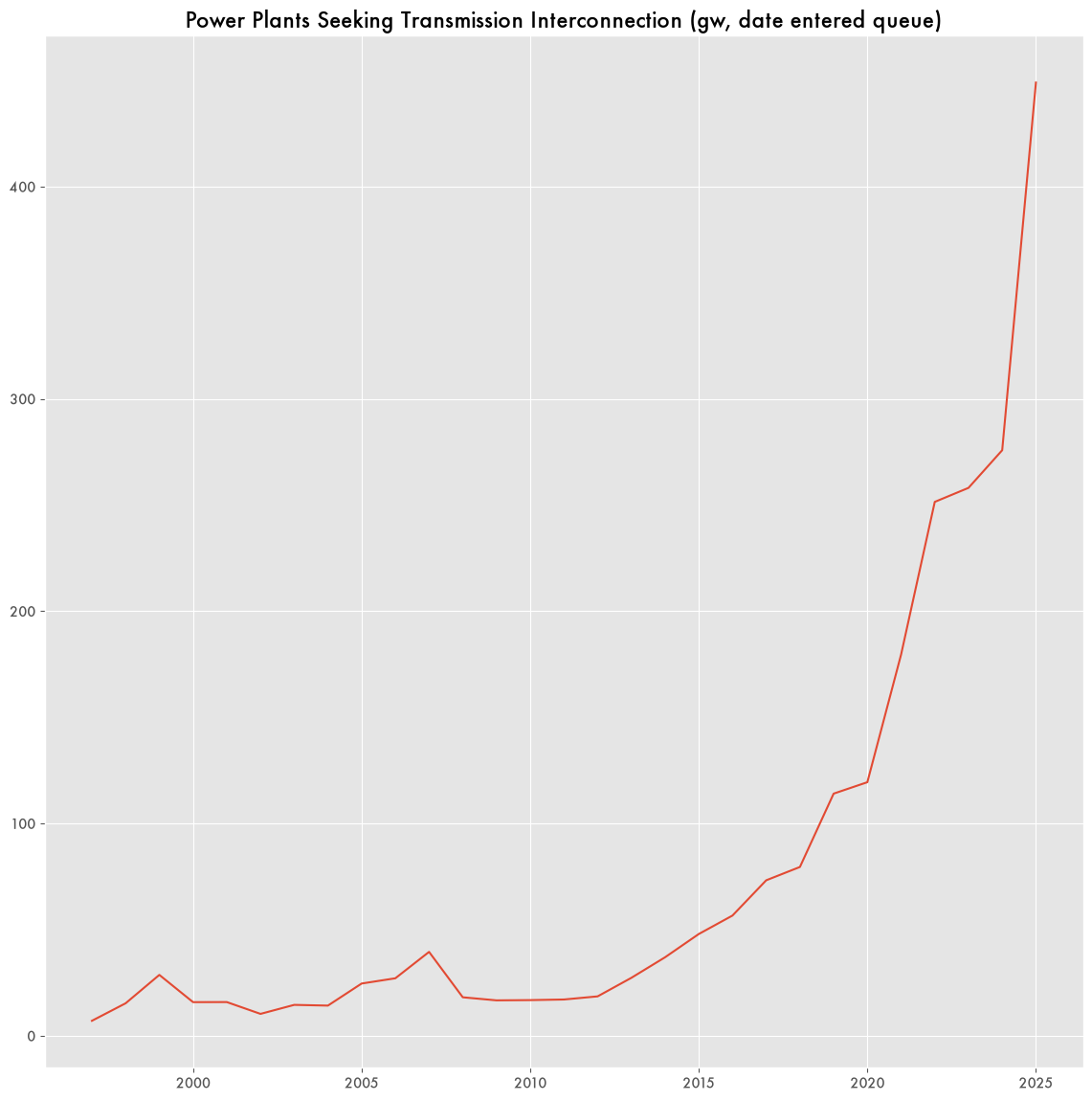
Besides issues of actual generation, solar is also the source of many withdrawn projects. Looking at the number of interconnection requests—an application for new energy addition to the grid—it would seem like hundreds of gigawatts are set to come online nationwide as generators scramble to take advantage of high prices.
But many of those projects don’t come to fruition and back out once they run up against interconnection costs, policy changes around tax incentives, and local zoning or other construction issues. Around 60 to 65 percent of proposed generation projects by gigawatt are withdrawn in recent years based on data from the Berkeley Lab.
Over the full history of the data, about 49 percent of withdrawn projects were solar, representing 31 percent by gigawatt of capacity.
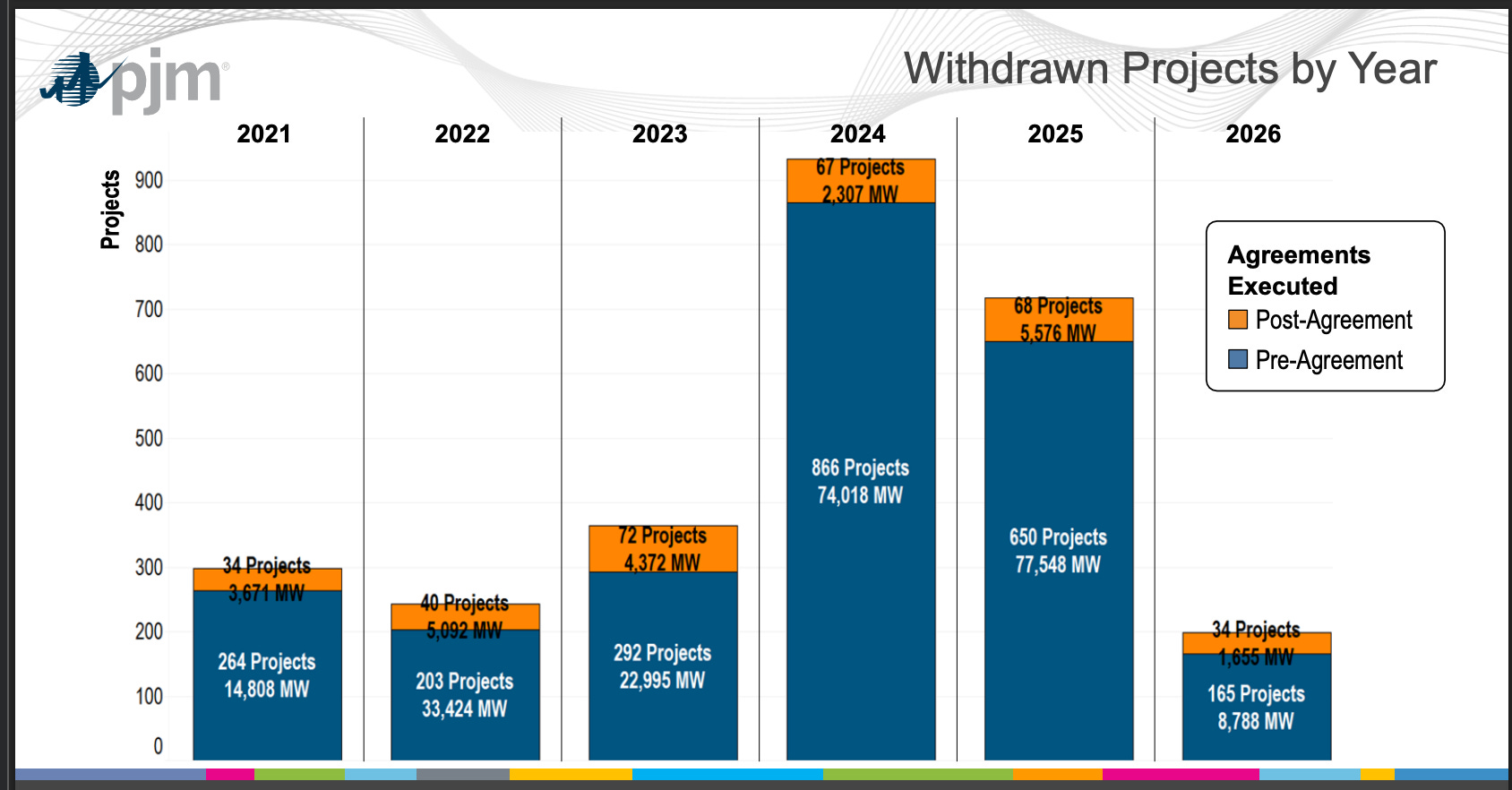
Based on PJM reports, over 159 gigawatts of potential capacity projects were withdrawn in 2024 and 2025 combined, over three times the annual average.